Русский
 Türkçe
 中文
中文
Red LED Light Therapy for Skin Rejuvenation: How It Supports Smoother, Revitalized-Looking Skin
Red LED Light Therapy for Skin Rejuvenation
Red LED light therapy has become an increasingly popular non-invasive technology in professional aesthetic and skin care programs. Using specific wavelengths of visible red light, LED phototherapy delivers controlled light energy to the skin without the heat, ablation or tissue removal associated with many traditional energy-based aesthetic procedures.
In professional skin rejuvenation programs, red wavelengths—particularly around 633nm and 660nm—are commonly used to support smoother-looking skin, improve the appearance of skin texture and promote a more refreshed and revitalized complexion.
Because LED therapy is non-invasive and generally comfortable, red light can be used as a standalone aesthetic treatment or incorporated into broader professional facial and post-aesthetic skin care programs.
What Is Red LED Light Therapy?
Red LED light therapy uses light-emitting diodes to deliver visible red light within a selected wavelength range to the skin.
Unlike lasers, which generate highly focused coherent light, LED systems typically illuminate a broader treatment area using arrays of light-emitting diodes. This makes professional LED systems particularly suitable for full-face and larger-area aesthetic treatments.
Red light generally falls within approximately 620–700nm, although professional aesthetic systems frequently use wavelengths around 633nm or 660nm.
These wavelengths have been investigated in clinical studies for applications including facial skin rejuvenation and the appearance of photoaged skin. Research has reported improvements in certain measures of wrinkles and skin appearance following repeated red LED treatments, although treatment parameters and reported outcomes vary between studies.
Why Is Red Light Used for Skin Rejuvenation?
One reason red LED light has attracted attention in aesthetic skin care is its ability to interact with biological tissue without producing the controlled thermal injury associated with many laser or radiofrequency procedures.
This process is commonly described as photobiomodulation, in which light within particular wavelength ranges interacts with light-sensitive cellular components and influences cellular signaling processes.
Research into photobiomodulation suggests that red and near-infrared wavelengths may influence mitochondrial activity and several cellular pathways associated with skin function. However, the precise biological response depends on factors such as wavelength, irradiance, energy density, treatment duration and frequency.
For aesthetic applications, the practical goal is not to aggressively damage or remove tissue.
Instead, red LED therapy is generally used to support a gradual improvement in the appearance and overall condition of the skin.
Key Aesthetic Applications of Red LED Light
Professional red LED therapy can be incorporated into a variety of aesthetic skin care programs.
Skin Rejuvenation
Red LED light is commonly associated with non-invasive facial rejuvenation.
Regular professional treatments may help support a smoother, fresher and more revitalized-looking complexion. Clinical studies of red LED photobiomodulation have reported improvements in certain visible signs of facial aging, although outcomes vary according to treatment protocol and individual skin characteristics.
Fine-Line and Mature Skin Care
Fine lines are one of the most common concerns addressed in aesthetic rejuvenation programs.
A randomized clinical study using 660nm red LED light reported a reduction in periocular wrinkle volume after a course of treatment. Other controlled LED studies have also investigated red wavelengths for visible facial rejuvenation.
For professional aesthetic clinics, red LED can therefore be positioned as a gentle component of programs designed for mature-looking or photoaged skin rather than as an aggressive resurfacing procedure.
Skin Texture and Overall Appearance
Skin rejuvenation involves more than fine lines.
Clients frequently seek improvements in:
-
uneven-looking texture
-
dull appearance
-
tired-looking skin
-
loss of visible vitality
-
early signs of skin aging
Red LED therapy can be incorporated into broader facial programs intended to improve overall skin appearance while maintaining a comfortable, non-invasive treatment experience.
Skin Radiance and Revitalization
Because red LED therapy does not depend on exfoliation or ablative tissue removal, it can be useful when the treatment objective is gradual skin revitalization.
For clients who prefer gentle aesthetic procedures, red LED provides an option that can be incorporated repeatedly into professional facial care programs.
633nm vs 660nm Red LED Light: What Is the Difference?
Two wavelengths frequently discussed in professional red LED therapy are 633nm and 660nm.
Both are within the visible red portion of the spectrum and both have been investigated for photobiomodulation and aesthetic skin applications.
633nm Red Light
633nm has a relatively long history in professional dermatologic LED systems.
Published research has investigated 633nm LED phototherapy, including its use alone and in combination with near-infrared wavelengths for skin rejuvenation. A randomized, placebo-controlled study evaluating LED phototherapy reported improvements in wrinkle measurements and skin elasticity under several treatment settings involving 633nm red and 830nm near-infrared light.
660nm Red Light
660nm is another widely studied red wavelength.
Recent facial rejuvenation research has used 660nm LED light, including controlled clinical studies evaluating treatment frequency and visible signs of aging.
A separate randomized split-face study comparing 660nm red light with 590nm amber light reported improvement in periocular wrinkle volume following a series of treatments.
Is 633nm or 660nm Better?
It is generally not appropriate to judge a professional LED system by wavelength alone.
The effectiveness of an LED treatment program also depends on parameters such as:
-
irradiance
-
energy density
-
treatment distance
-
treatment duration
-
treatment frequency
-
LED distribution
-
treatment-area coverage
-
treatment protocol
Therefore, 633nm versus 660nm should not be interpreted simply as one wavelength being universally superior to the other.
Both can be relevant wavelengths for professional red LED skin rejuvenation when combined with an appropriately designed treatment system and protocol.
Who Is Red LED Light Therapy Suitable For?
Within professional aesthetic skin care, red LED programs may be considered for clients concerned with:
-
early visible signs of aging
-
fine lines
-
dull or tired-looking skin
-
uneven-looking skin texture
-
mature-looking skin
-
loss of skin radiance
-
overall facial skin rejuvenation
Because individual skin condition, medical history and treatment objectives vary, professional treatment protocols should always be selected according to the client's condition and the instructions for the specific device.
How Is Red LED Therapy Used in Professional Aesthetic Clinics?
One of the advantages of LED therapy is its flexibility within aesthetic treatment programs.
Professional clinics may use red LED light as:
A standalone facial rejuvenation program
For clients seeking a gentle, non-invasive light-based facial treatment.
Part of a combined aesthetic facial
LED can be incorporated into broader skin-care protocols according to the treatment objective.
A maintenance-oriented skin care program
Because visible improvements from red light are generally gradual rather than immediate, repeated sessions are often used in professional protocols.
A complementary post-aesthetic skin care step
Depending on the primary procedure, device indications and professional assessment, gentle LED programs may also be incorporated into post-aesthetic skin care.
Current evidence suggests that cosmetic benefits from red-light photobiomodulation are generally progressive and modest rather than instant or transformative, making realistic treatment expectations important.
Red LED Light for Post-Aesthetic Skin Care
Modern aesthetic clinics increasingly combine different technologies within an overall skin management strategy.
After certain aesthetic procedures, the skin may temporarily appear stressed, dry or red. When appropriate for the procedure and device indications, non-invasive LED light can be incorporated into professional post-aesthetic care programs.
For the Omni Laser website, however, red LED should be positioned as supportive post-aesthetic skin care, rather than making claims that it treats wounds, complications or medical conditions.
This distinction helps maintain a clear professional aesthetic positioning.
Red Light vs Near-Infrared Light
Red and near-infrared light are related but should not be treated as identical wavelengths.
Visible red light commonly used in LED skin care includes wavelengths such as 633nm and 660nm.
Near-infrared light uses longer wavelengths such as 830nm or 850nm and penetrates optical tissue differently from visible red light.
For this reason, professional LED systems may offer red and near-infrared light separately or combine them within one multi-wavelength program.
Red light is frequently positioned around visible skin rejuvenation and facial skin conditioning, while near-infrared light can complement red light in more advanced multi-wavelength aesthetic protocols.
[Learn more about Near-Infrared LED Therapy for Skin Revitalization →]
Why Combine Red and Near-Infrared LED Light?
Multi-wavelength LED therapy has become an important area of professional aesthetic skin care.
Combining red and near-infrared wavelengths allows a professional system to deliver light across different wavelength ranges within one skin rejuvenation program.
Clinical research has evaluated combinations including 633nm red + 830nm near-infrared and 630nm red + 850nm near-infrared for facial rejuvenation and visible aging concerns.
Rather than suggesting that more wavelengths automatically mean better results, professional treatment design should focus on matching wavelengths and treatment parameters to the intended aesthetic application.
[Learn more about Red + Near-Infrared LED Therapy for Skin Rejuvenation →]
Red LED Therapy vs Traditional Energy-Based Skin Rejuvenation
Red LED therapy differs fundamentally from technologies such as ablative lasers, intense pulsed light or thermal radiofrequency.
It does not rely primarily on controlled thermal damage, tissue vaporization or exfoliation.
For this reason, red LED therapy can occupy a different role within an aesthetic clinic:
Laser / IPL / RF
Often selected when stronger energy-based skin remodeling or specific aesthetic targets are required.
Red LED Therapy
Often selected for gentle skin rejuvenation, skin conditioning, complementary facial care and repeated non-invasive treatments.
The technologies therefore do not necessarily compete with each other.
A professional clinic may use them at different stages of a broader aesthetic treatment strategy.
What Determines the Performance of a Professional Red LED Therapy System?
Wavelength is important, but wavelength alone does not determine the quality of an LED treatment system.
Professional buyers should also consider:
Irradiance
Irradiance describes the optical power delivered over a given treatment area and is generally expressed in mW/cm².
Energy Density
Energy density describes the amount of optical energy delivered to an area over the treatment period and is commonly expressed in J/cm².
Treatment Area
Uniform coverage is important for professional full-face LED therapy.
A larger number of LEDs does not automatically guarantee better performance if light distribution across the treatment area is poor.
Treatment Distance
The distance between the LED source and the skin can influence the amount and uniformity of light reaching the treatment area.
Wavelength Accuracy
Professional LED systems should use clearly defined wavelength configurations appropriate for their intended application.
Treatment Protocol
Treatment time and frequency should be matched to the output characteristics of the system rather than copied directly from another LED device.
Published research demonstrates substantial variability among LED treatment parameters, which is why a single universal red-light dose should not be promoted for every device.
Professional Red LED Therapy Systems from Omni Laser
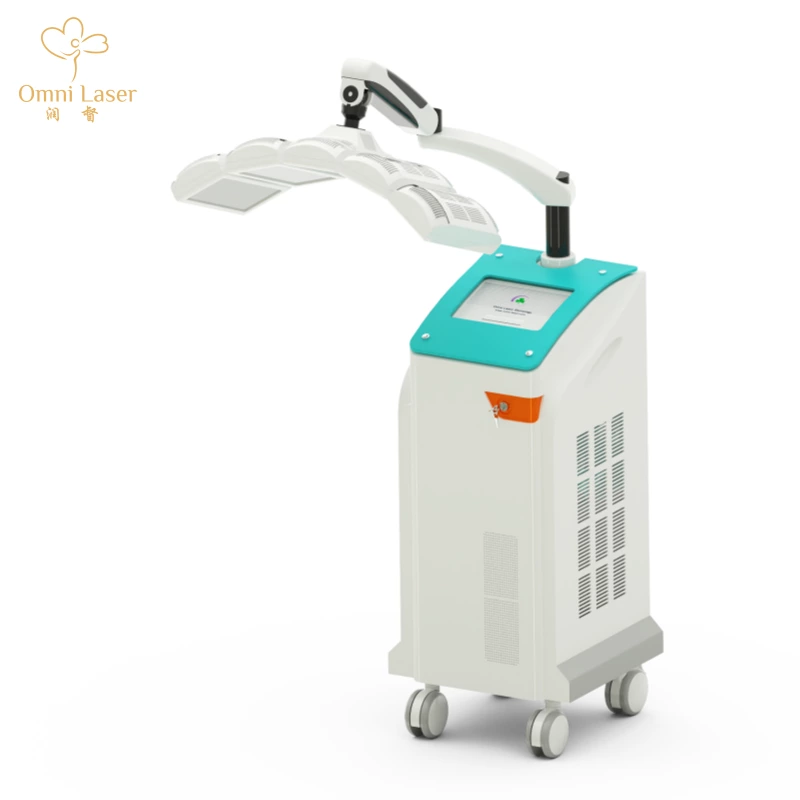
Omni Laser develops professional LED phototherapy systems for aesthetic clinics, skin care centers, distributors and OEM/ODM beauty equipment partners.
Depending on the system configuration, professional LED platforms can incorporate red light together with other wavelengths such as blue, yellow, green and near-infrared light to support different aesthetic skin care programs.
For red-light skin rejuvenation, wavelength selection is only part of the overall system design. LED quantity, irradiance, optical distribution, treatment distance, treatment area, software protocols and system stability should also be considered when evaluating a professional LED therapy device.
[Explore Omni Laser Professional LED Therapy Systems →]
Frequently Asked Questions About Red LED Light Therapy
What wavelength is commonly used for red LED skin rejuvenation?
Professional and research applications frequently use red wavelengths around 633nm and 660nm, although other wavelengths within the red spectrum may also be used.
Is 633nm the same as 660nm red light?
No. They are different wavelengths within the visible red spectrum. Both have been investigated for skin and photobiomodulation applications, but their performance should be assessed together with irradiance, treatment duration, energy density and overall device design.
What is red LED light used for in aesthetic skin care?
Red LED light is commonly incorporated into professional programs for skin rejuvenation, fine-line care, improving the appearance of skin texture and supporting a more radiant, revitalized-looking complexion.
Does red LED therapy produce immediate results?
Red LED therapy is generally positioned as a gradual skin-conditioning and rejuvenation technology rather than an immediate resurfacing procedure. Published studies typically evaluate repeated sessions over several weeks.
Is red LED therapy the same as laser treatment?
No. LED systems use light-emitting diodes and generally illuminate a broader area with non-coherent light, while lasers produce a more focused and coherent light source. They are different technologies and can serve different roles in aesthetic practice.
Can red and near-infrared LED light be used together?
Yes. Red and near-infrared combinations have been investigated for facial rejuvenation, and many professional LED systems incorporate both wavelength ranges in multi-wavelength treatment programs.
Can red LED light be combined with other LED colors?
Professional multi-wavelength systems may combine red light with blue, yellow or near-infrared wavelengths depending on the intended aesthetic program.
For example:
Red + Blue — acne-prone and oily skin care
Red + Yellow — sensitive and redness-prone skin care
Red + Near-Infrared — advanced skin rejuvenation
Red + Yellow + Near-Infrared — multi-wavelength skin rejuvenation
How should a clinic choose a professional red LED therapy machine?
Clinics and distributors should evaluate not only wavelength, but also irradiance, energy density, LED distribution, treatment area, treatment distance, system stability, available protocols, regulatory documentation and manufacturer support.
Professional LED Skin Rejuvenation Solutions
Red LED light has developed into an important component of modern non-invasive aesthetic skin care.
Wavelengths such as 633nm and 660nm have been investigated for facial rejuvenation, while professional multi-wavelength systems can combine red light with other LED wavelengths to address broader aesthetic skin care requirements.
For clinics, distributors and OEM/ODM partners, the key is not simply choosing a particular color of light, but selecting a professional LED system with appropriate wavelengths, controlled output, uniform treatment coverage and treatment programs designed around real aesthetic applications.
Explore Omni Laser LED Therapy Systems →
Learn About Red + Near-Infrared LED Skin Rejuvenation →
Contact Omni Laser for LED Therapy OEM/ODM Solutions →