Русский
 Türkçe
 中文
中文
IPL Skin Rejuvenation Treatment: How Intense Pulsed Light Improves Photoaged Skin
IPL Skin Rejuvenation Treatment: How Intense Pulsed Light Supports Photoaged Skin
Skin aging is a natural biological process, but its visible appearance can be accelerated by external factors such as ultraviolet exposure and environmental stress.
Over time, the skin may gradually develop concerns such as uneven tone, rough texture, visible pigmentation, redness and fine lines. Chronic ultraviolet exposure is particularly important because it accelerates photoaging, contributing to premature changes in skin structure and appearance.
Professional IPL skin rejuvenation, also known as IPL photorejuvenation or photofacial treatment, uses controlled broad-spectrum light to address multiple visible signs of photodamaged skin within one treatment platform.
For aesthetic clinics, this makes IPL particularly useful when patients present with a combination of pigmentation, uneven tone, redness and textural concerns rather than a single isolated indication.
A. How Does Skin Aging Develop?
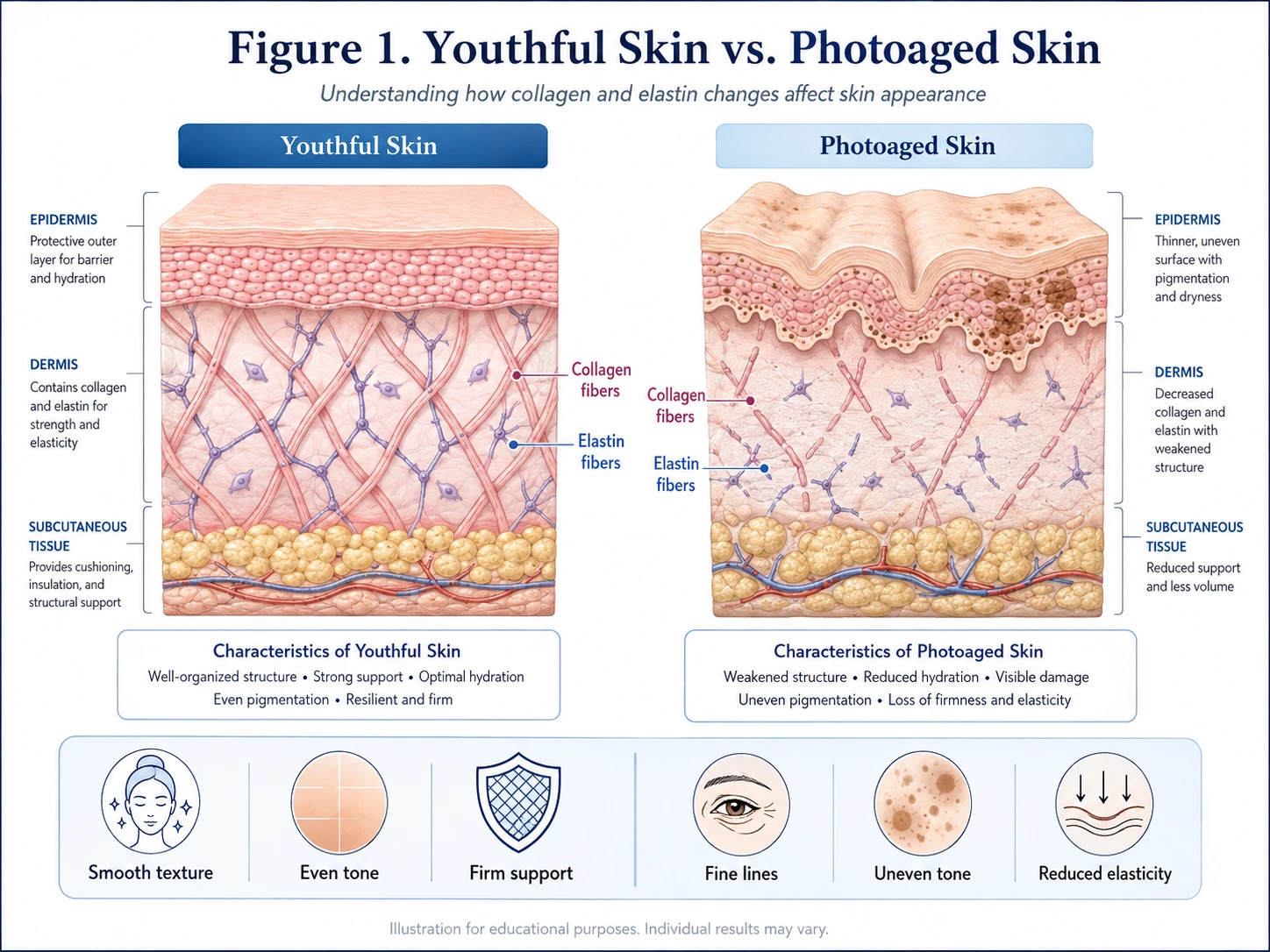
Healthy-looking youthful skin depends on the interaction of multiple structures within the epidermis and dermis.
Two particularly important structural proteins are collagen and elastin.
Collagen contributes to the structural support of the skin, while elastin contributes to its ability to stretch and return toward its original form.
With chronological aging and repeated exposure to environmental factors—especially ultraviolet radiation—the organization and renewal of the dermal extracellular matrix can change. UV exposure can promote collagen breakdown and interfere with new collagen synthesis, contributing to the visible characteristics of photoaged skin.
Common Visible Signs of Skin Aging
These changes may appear as:
- Fine lines
- Uneven skin tone
- Rougher skin texture
- Sun-induced pigmentation
- Reduced skin radiance
- Visible redness
- Loss of a smooth, youthful-looking appearance
Youthful Skin vs. Photoaged Skin
Youthful-looking skin generally has:
- Better organized collagen support
- More uniform texture
- More even pigmentation
- Greater visible firmness and elasticity
Photoaged skin may show:
- Fragmented or altered collagen structure
- Reduced dermal support
- Uneven pigmentation
- Rough texture
- Fine lines
- Reduced elasticity
B. What Roles Do Collagen and Elastin Play in Skin Rejuvenation?
Collagen
Collagen is one of the principal structural proteins within the dermis.
It provides a supportive framework that contributes to skin strength, density and smoothness.
Over time, intrinsic aging and chronic sun exposure can alter collagen production and increase collagen degradation. These structural changes contribute to some of the visible characteristics associated with aging and photodamage.
For this reason, dermal remodeling and collagen support are important concepts in professional skin rejuvenation treatments.
Elastin
Elastin works alongside collagen but performs a different structural role.
Its elastic properties allow skin to stretch and recoil.
As skin ages and accumulates environmental damage, elastic fibers may also undergo structural changes. As a result, the skin may gradually lose some of its youthful-looking resilience.
From a treatment perspective, skin rejuvenation therefore involves more than simply removing pigmentation. The objective is to improve the overall appearance of photodamaged skin—including tone, texture and dermal quality.
C. How Does IPL Skin Rejuvenation Work?
IPL stands for Intense Pulsed Light.
Unlike a laser, which generally emits a comparatively narrow wavelength or wavelength band, IPL generates broad-spectrum light that can be filtered for different aesthetic targets.
This versatility allows professional IPL platforms to address several features of photoaged skin within a treatment program.
Depending on the wavelength range, treatment parameters and target chromophore, IPL energy may interact with:
- Melanin in visible pigmentation
- Hemoglobin in superficial vascular concerns
- Dermal structures involved in photorejuvenation
IPL has been widely investigated for photorejuvenation, pigmentation and vascular concerns, and research has reported improvements in several features of photoaged skin.
D. How Can AFT IPL Technology Support Skin Rejuvenation?
AFT-based IPL systems are designed to deliver controlled light energy across selected wavelength ranges.
For Omni Laser AFT configurations using approximately 530–950 nm for skin rejuvenation applications, filtered light can be used as part of a professional photorejuvenation protocol according to the patient's skin condition, skin type and treatment objective.
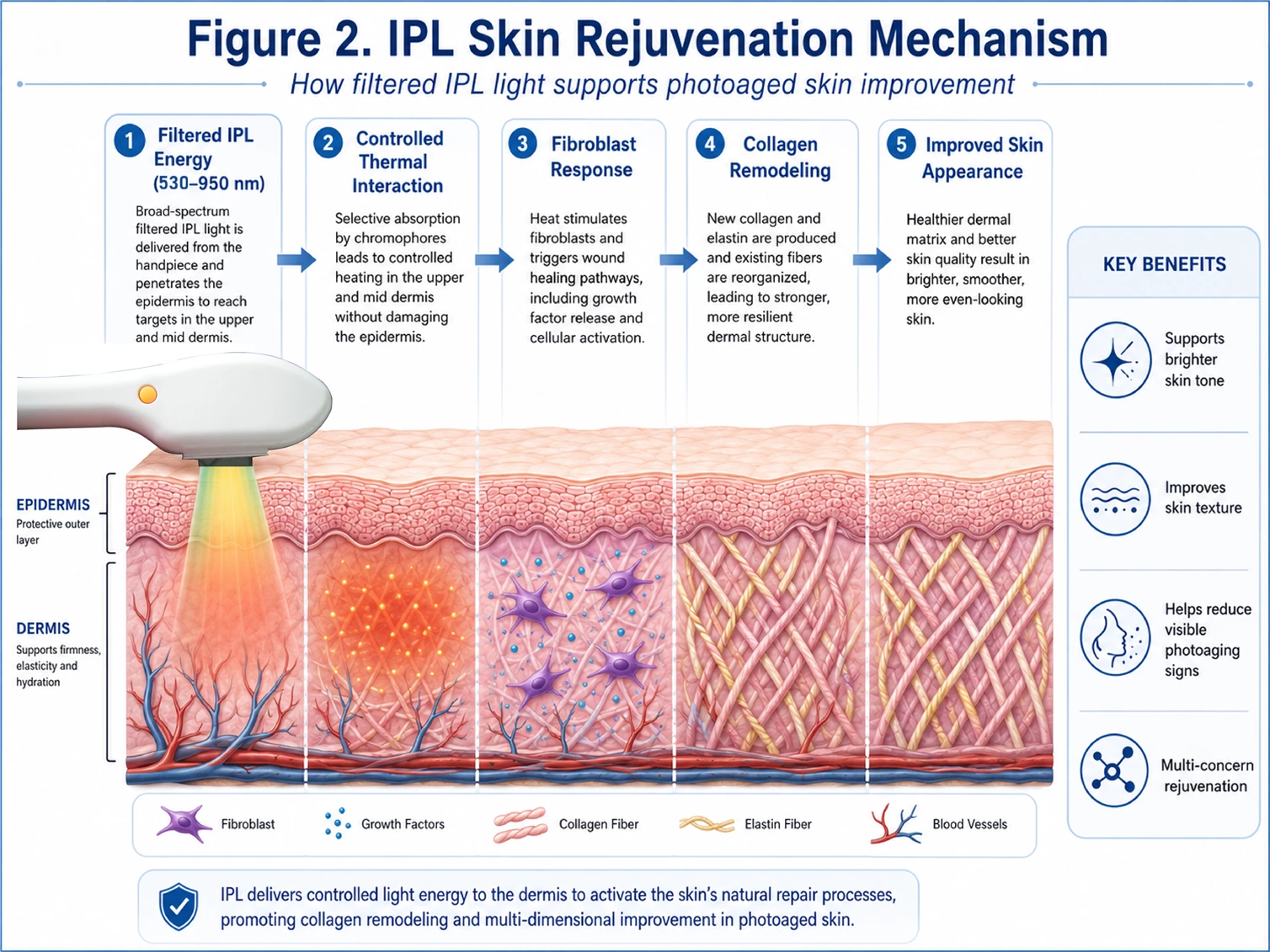
Rather than describing the mechanism simply as “570 nm reaches collagen,” it is more accurate to understand IPL rejuvenation as a combination of several light–tissue interactions.
1. Light Energy Enters the Skin
The IPL handpiece delivers filtered broad-spectrum light into the treatment area.
↓
2. Selected Chromophores Absorb Light
Pigmented and vascular targets absorb portions of the delivered optical energy.
↓
3. Controlled Thermal Effects Are Produced
Absorbed optical energy is converted into heat within targeted structures.
↓
4. Dermal Remodeling May Be Supported
Controlled thermal stimulation may influence fibroblast activity and collagen remodeling within the dermis.
Experimental and clinical studies have reported increased collagen-related activity following IPL exposure, although the magnitude of visible wrinkle or tightening improvement varies between studies.
↓
5. Overall Skin Appearance May Improve
Over a treatment course, appropriate IPL photorejuvenation may help improve:
- Uneven skin tone
- Visible pigmentation
- Redness
- Skin texture
- Overall skin radiance
- The appearance of some signs of photoaging
E. Why Is IPL Useful for Multi-Concern Skin Rejuvenation?
One of the main advantages of professional IPL is that photoaged skin rarely presents with only one visible concern.
For example, one patient may simultaneously have:
- Sun spots
- Uneven pigmentation
- Facial redness
- Rough texture
- Early fine lines
A professional IPL platform can therefore be valuable for clinics seeking a multi-application skin rejuvenation solution rather than a device designed for only one target.
This is also one of the main differences between IPL photorejuvenation and many single-wavelength laser systems.
F. What Skin Concerns Can Professional IPL Rejuvenation Address?
Depending on system configuration, patient selection and treatment parameters, professional IPL platforms may be used to support treatment programs for:
Uneven Skin Tone
IPL can target areas containing excess melanin, helping improve the appearance of selected superficial pigmentation concerns.
→ Learn more about IPL Pigmentation Treatment
Sun-Induced Pigmentation
Freckles, sun spots and age-related pigment irregularities are common components of photoaged skin.
Facial Redness
Selected IPL wavelengths can interact with hemoglobin and may be used for appropriate superficial vascular concerns.
→ Learn more about IPL Vascular Treatment
Skin Texture and Photodamage
IPL photorejuvenation has been studied for improvement of skin texture and other characteristics associated with photodamaged skin.
Fine Lines and Overall Skin Quality
Some studies report collagen remodeling and improvement of photoaged skin following IPL, although results vary and IPL should not be presented as guaranteed wrinkle removal or surgical-equivalent skin tightening.
G. Professional IPL Skin Rejuvenation in Aesthetic Clinics
Professional IPL skin rejuvenation requires more than selecting a wavelength.
Treatment parameters should be customized according to factors such as:
- Skin type
- Pigmentation level
- Treatment indication
- Target depth
- Energy density
- Pulse characteristics
- Treatment area
- Cooling performance
Proper device settings and trained operation are important because inappropriate energy delivery can increase the risk of adverse effects such as erythema, burns or pigmentary changes.
For this reason, professional IPL platforms should combine controlled energy delivery with effective cooling and adjustable treatment parameters.
H. IPL Skin Rejuvenation vs. Laser Skin Rejuvenation
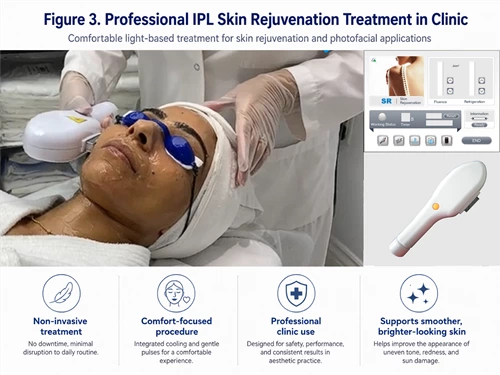
IPL and laser technologies can both be used in professional aesthetic practices, but they work differently.
| Feature | IPL Skin Rejuvenation | Laser Skin Rejuvenation |
|---|---|---|
| Light Source | Broad-spectrum pulsed light | Specific wavelength or wavelength range |
| Main Advantage | Multiple targets in one platform | Highly targeted application |
| Pigmentation | Yes, depending on filters | Yes, depending on laser |
| Vascular Concerns | Yes, depending on configuration | Yes, with suitable wavelength |
| Photorejuvenation | Multi-concern approach | Technology-dependent |
| Clinic Positioning | Versatile platform | More specialized treatment |
IPL can therefore be particularly attractive to clinics seeking one platform capable of treating several common aesthetic concerns.
I. Omni Laser Professional IPL Skin Rejuvenation Solution
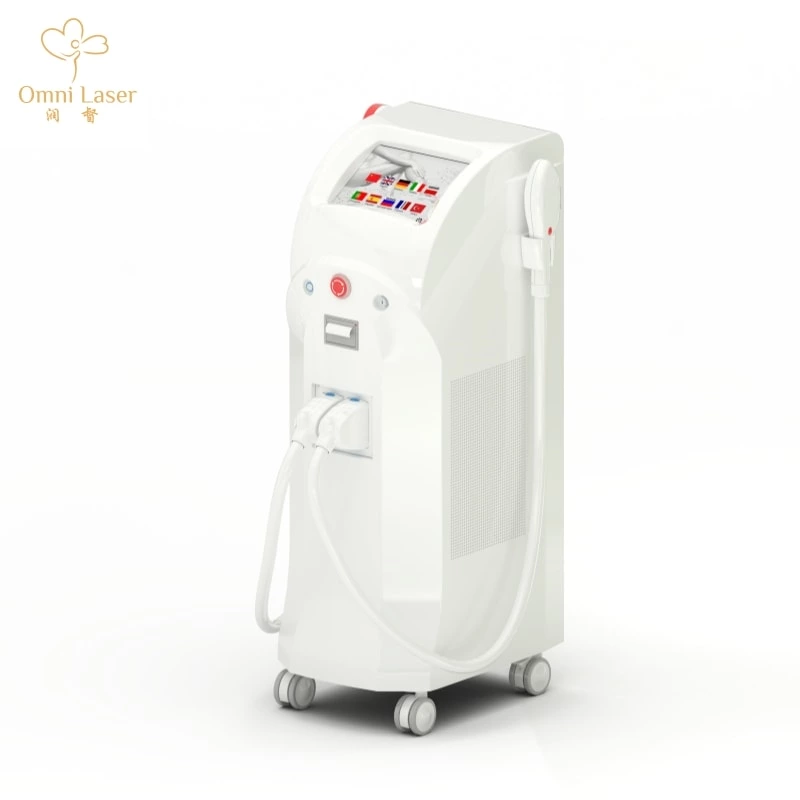
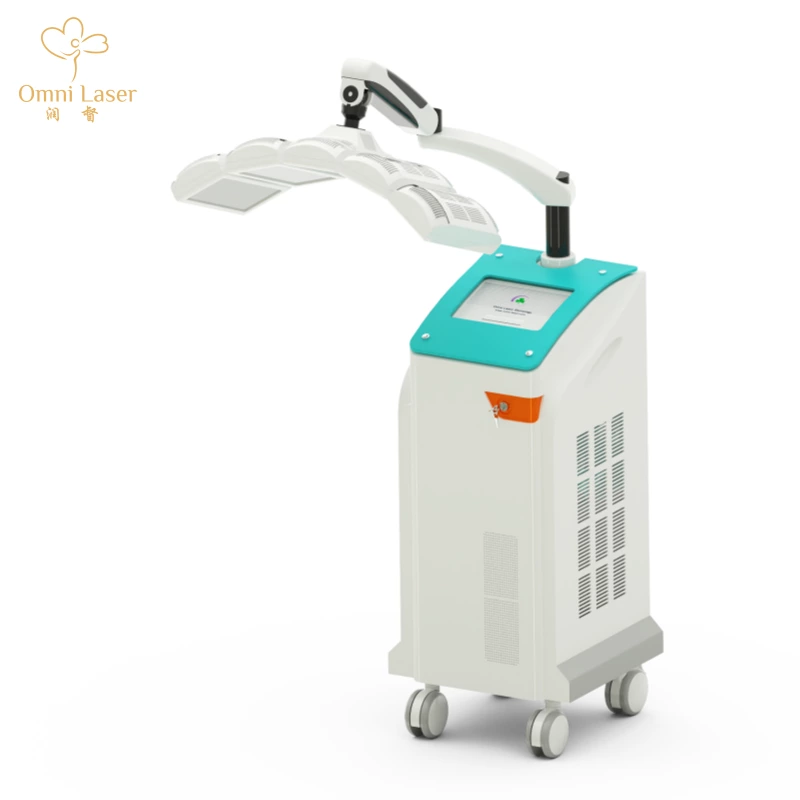
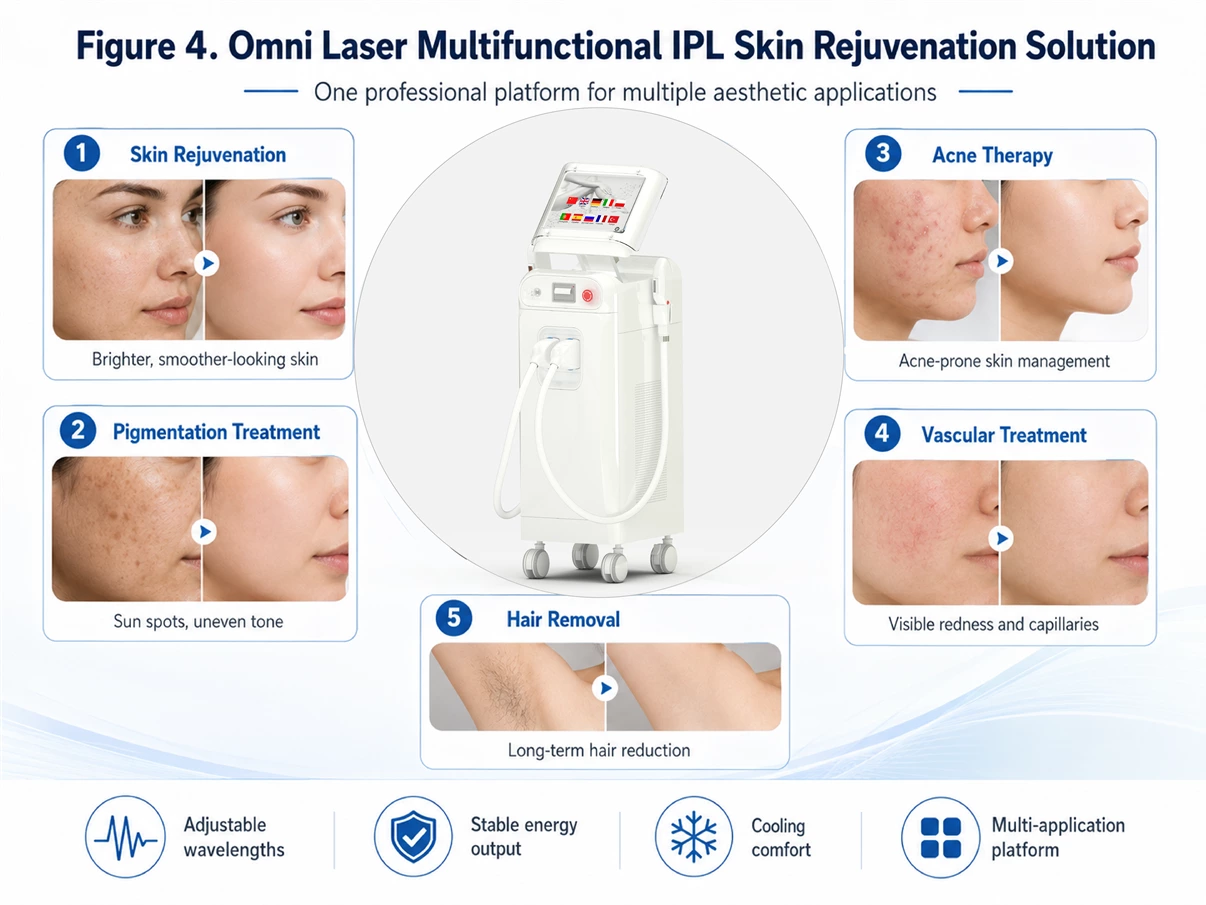
Omni Laser provides professional IPL systems designed for aesthetic clinics, medical spas, dermatology practices and international distributors.
Depending on configuration, one IPL platform can support multiple treatment categories:
- Skin Rejuvenation
- Pigmentation Treatment
- Hair Removal
- Acne Therapy
- Vascular Treatment
Omni Laser systems can combine selectable wavelength ranges, controlled pulse delivery and cooling technologies to provide clinics with a flexible light-based treatment platform.
Explore the Related Technology
For a deeper explanation of how the light source, pulse structure and energy delivery work:
→ Learn More About AFT IPL Technology
→ Learn More About Square-Motion IPL Technology
Explore the Professional IPL Platform
→ Professional IPL Hair Removal & Skin Rejuvenation System
Frequently Asked Questions About IPL Skin Rejuvenation
What is IPL skin rejuvenation?
IPL skin rejuvenation is a non-ablative light-based aesthetic treatment that uses filtered broad-spectrum pulsed light to address selected features of photodamaged skin, such as uneven pigmentation, redness and textural irregularities.
What is the difference between IPL skin rejuvenation and an IPL photofacial?
The terms are commonly used to describe similar light-based treatments. “IPL skin rejuvenation” emphasizes the treatment objective, while “IPL photofacial” is frequently used to describe facial IPL procedures for pigmentation, redness and overall skin appearance.
Does IPL stimulate collagen?
Research suggests that IPL exposure can influence fibroblast activity and collagen-related remodeling. However, treatment outcomes depend on the IPL system, parameters, skin condition and treatment protocol, and clinical studies have reported varying degrees of improvement.
Can IPL remove wrinkles?
IPL should not be described as a treatment that simply “removes wrinkles.” Some patients and studies report improvement in skin texture or selected signs of photoaging, while results for wrinkles and tightening are variable.
What skin concerns can IPL skin rejuvenation address?
Depending on wavelength selection and system configuration, professional IPL systems may be used for pigmentation, uneven skin tone, selected vascular concerns, photodamage and overall skin rejuvenation.
Why do professional clinics use multifunctional IPL systems?
A multifunctional IPL platform allows clinics to address several common aesthetic concerns—including hair removal, pigmentation, acne, vascular appearance and skin rejuvenation—using one professional system with different treatment settings and filters.
Looking for a Professional IPL Skin Rejuvenation Solution?
Omni Laser provides professional IPL and AFT-based solutions for aesthetic clinics, medical spas and global distributors.
Whether your business focuses on skin rejuvenation, hair removal or multi-application aesthetic treatments, we can help configure an IPL platform according to your target treatments and market requirements.
Request an IPL Solution →