Русский
 Türkçe
 中文
中文
Near-Infrared LED Therapy for Skin Revitalization and Post-Aesthetic Care
Near-Infrared LED Therapy for Skin Revitalization and Post-Aesthetic Care
Near-infrared LED therapy has become an important component of modern professional aesthetic skin care.
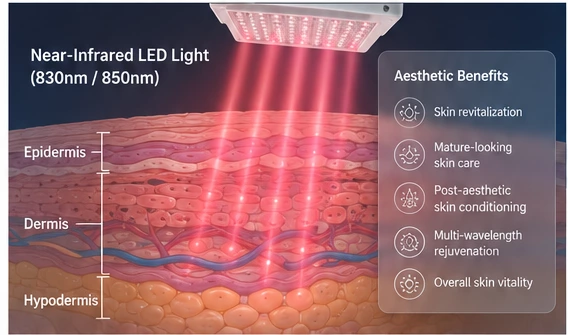
Using wavelengths beyond the visible red portion of the spectrum, professional LED systems can incorporate near-infrared light into skin revitalization, mature-looking skin care, post-aesthetic skin conditioning and multi-wavelength rejuvenation programs.
Among the wavelengths commonly used in professional LED systems, 830nm and 850nm are two of the best-known near-infrared options.
Unlike visible red light, near-infrared light is largely invisible to the human eye. Its longer wavelength also means that it interacts with skin tissue differently from shorter visible wavelengths.
In professional aesthetic applications, near-infrared LED therapy can be incorporated into programs focused on:
- skin revitalization
- mature-looking skin care
- tired or dull-looking complexion
- post-aesthetic skin conditioning
- overall skin vitality
- multi-wavelength facial rejuvenation
The goal of professional aesthetic near-infrared therapy is not to create an aggressive thermal effect or remove tissue.
Instead, it is generally positioned as a gentle, non-invasive light-based technology that can complement broader skin-rejuvenation programs.
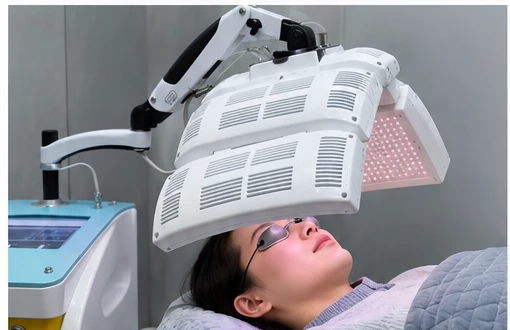
[Image 1: Near-Infrared LED Therapy for Skin Revitalization]
What Is Near-Infrared LED Therapy?
Near-infrared light sits immediately beyond visible red light in the electromagnetic spectrum.
Visible red LED systems commonly use wavelengths such as:
633nm
660nm
Near-infrared LED systems commonly use longer wavelengths such as:
830nm
850nm
Because near-infrared light lies outside the main visible spectrum, the user may not see the same bright color that is obvious with red, blue, yellow or green LED light.
This is important when evaluating a professional device.
A near-infrared LED system can be operating even when the treatment head does not appear visually bright.
Near-infrared should therefore not be described simply as:
“a darker red light”
or:
“a stronger red light.”
It is a distinct wavelength range with different optical characteristics.
Professional aesthetic systems may use near-infrared light alone or combine it with visible wavelengths depending on the intended skin-care program.
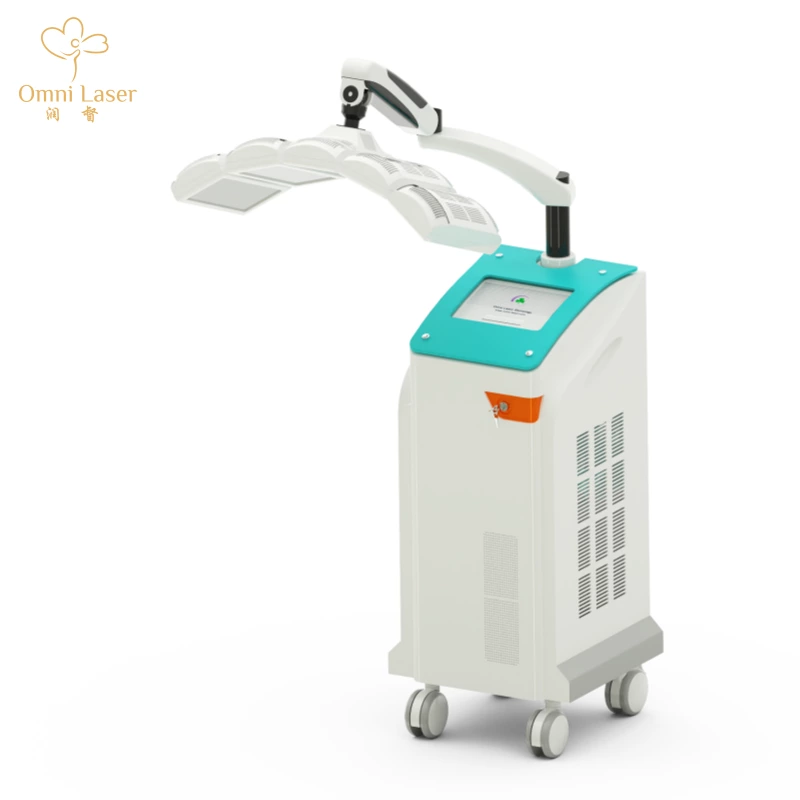
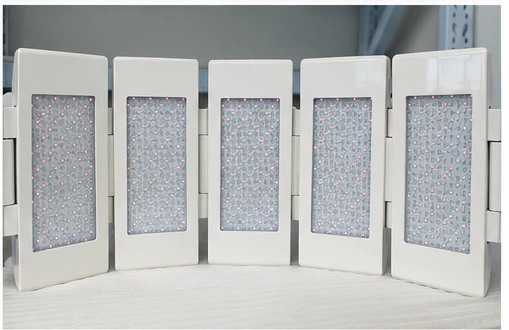
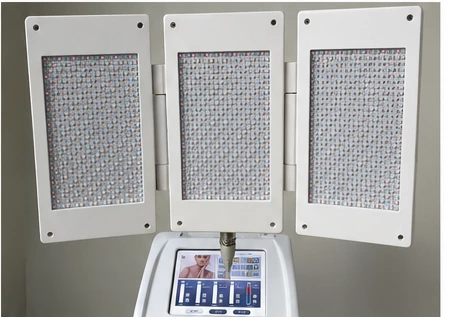
Omni Laser professional LED therapy systems are available in different multi-panel configurations, including:
3-Panel LED Therapy System — 1,800 LEDs
and
5-Panel LED Therapy System — 2,400 LEDs
These configurations are designed to provide broad treatment-area coverage for professional aesthetic applications.
[Image 2: 5-Panel Professional LED Therapy System with 2,400 LEDs]
Why Is Near-Infrared Light Used in Aesthetic Skin Care?
Different wavelengths of light interact with skin tissue in different ways.
As wavelength changes, so do characteristics such as:
- absorption
- scattering
- optical penetration
- interaction with biological chromophores
Because near-infrared wavelengths are longer than visible red wavelengths, they can complement visible LED light in professional aesthetic programs.
For medical-aesthetic skin care, the most appropriate positioning is around:
skin revitalization
skin conditioning
mature-looking skin care
post-aesthetic care
multi-wavelength rejuvenation
The goal is not to describe near-infrared LED as a treatment for disease, injury or pain.
Instead, it should be presented as part of a professional light-based approach designed to support the overall appearance and condition of the skin.
[Image 3: How Near-Infrared LED Light Works in the Skin]
Key Aesthetic Applications of Near-Infrared LED Light
Skin Revitalization
One of the primary aesthetic uses of near-infrared LED therapy is skin revitalization.
Many clients seek professional treatments because their skin appears:
- tired
- dull
- less radiant
- mature
- lacking visible vitality
Near-infrared LED can be incorporated into non-invasive skin-care programs designed to support a fresher and more revitalized-looking complexion.
Unlike aggressive resurfacing procedures, LED therapy can be used as part of a gentler skin-management approach.
Mature-Looking Skin Care
Mature-looking skin is another important application area.
As skin ages, clients may become concerned with:
- visible fine lines
- reduced radiance
- uneven-looking texture
- tired appearance
- loss of visible firmness
- overall changes in skin quality
Near-infrared LED therapy can be incorporated into broader anti-aging and skin-rejuvenation programs designed for these concerns.
It should not be positioned as a replacement for all other aesthetic technologies.
Instead, it can complement treatments such as:
- professional facial care
- red LED therapy
- IPL-based rejuvenation
- radiofrequency skin care
- other non-invasive aesthetic technologies
This creates a broader and more flexible treatment strategy for clinics.
Skin Conditioning
Professional skin rejuvenation is not always about aggressive correction.
Many clients are simply looking for:
- better-looking skin texture
- improved overall skin condition
- more radiant appearance
- more refreshed-looking skin
Near-infrared LED can be incorporated into these maintenance-oriented programs.
This is particularly useful for clinics that want to provide repeatable, non-invasive light-based facial care.
Post-Aesthetic Skin Care
Near-infrared LED therapy can also be incorporated into professional post-aesthetic skin-care programs.
After selected aesthetic procedures, the skin may temporarily appear:
- red
- dry
- stressed
- sensitive-looking
- less comfortable than usual
When appropriate for the procedure, client and device instructions, a gentle LED program can be incorporated as part of post-aesthetic skin conditioning.
For the Omni Laser website, this should consistently be described as:
post-aesthetic skin care
or:
post-aesthetic skin conditioning
rather than:
wound healing
injury repair
inflammation treatment
This keeps the page firmly within a professional medical-aesthetic positioning.
Multi-Wavelength Skin Rejuvenation
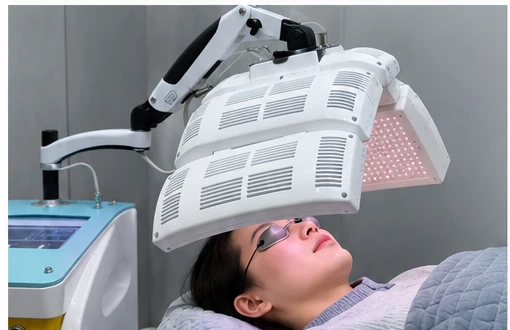
Near-infrared LED is especially valuable when used as part of a multi-wavelength LED system.
Professional aesthetic clinics may use near-infrared light together with:
- red light
- yellow light
- other selected wavelengths
depending on the client's skin concerns.
The most important combination for skin rejuvenation is:
Red LED + Near-Infrared LED
This allows visible red and near-infrared wavelengths to complement each other within a broader professional rejuvenation program.
[Image 4: Near-Infrared LED Facial Skin Revitalization]
830nm vs 850nm Near-Infrared LED Light
Two wavelengths commonly discussed in professional near-infrared LED systems are:
830nm
850nm
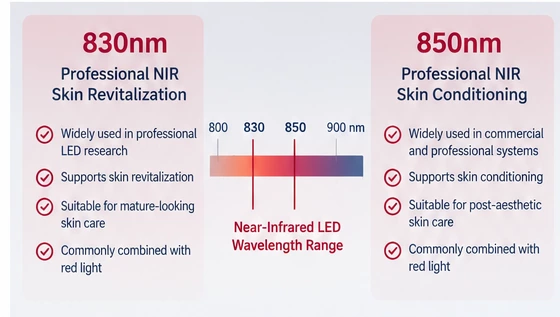
Both lie within the near-infrared region, but they are not exactly the same wavelength.
830nm Near-Infrared Light
830nm is widely used in professional photobiomodulation research and light-based systems.
For aesthetic skin care, 830nm can be incorporated into programs focused on:
- skin revitalization
- mature-looking skin
- post-aesthetic skin conditioning
- multi-wavelength facial rejuvenation
- overall skin vitality
830nm has also been used together with visible red light in professional LED systems.
From a website positioning perspective, 830nm is particularly useful when the goal is to present a more advanced professional LED skin-care platform.
850nm Near-Infrared Light
850nm is another very common near-infrared wavelength in professional and commercial LED systems.
It is often used together with red wavelengths such as:
633nm
660nm
For aesthetic applications, 850nm can be positioned around:
- skin conditioning
- overall skin revitalization
- mature-looking skin care
- post-aesthetic skin care
- multi-wavelength rejuvenation
850nm is also widely recognized in the LED equipment market, making it a useful wavelength for distributors and professional buyers who are already familiar with red and near-infrared combinations.
Is 830nm Better Than 850nm?
It is not appropriate to say that one wavelength is universally better.
A professional LED treatment system should not be evaluated by wavelength alone.
Its actual performance depends on several factors, including:
- irradiance
- energy density
- treatment distance
- exposure time
- LED quantity
- LED distribution
- optical uniformity
- treatment area
- treatment protocol
Therefore, the correct professional message is:
830nm and 850nm are both relevant near-infrared wavelengths, and the appropriate choice depends on the design and intended application of the LED system.
For clinics and distributors, the overall system design is more important than selecting a wavelength based on a single number.
[Image 5: 830nm vs 850nm Near-Infrared LED Light]
Who Is Near-Infrared LED Therapy Suitable For?
Within professional aesthetic skin care, near-infrared LED programs may be considered for clients concerned with:
- mature-looking skin
- dull complexion
- tired-looking skin
- reduced skin vitality
- early visible signs of aging
- post-aesthetic skin conditioning
- overall facial rejuvenation
- maintenance-oriented skin care
- multi-wavelength anti-aging programs
As with all professional aesthetic treatments, treatment selection should take into account:
- individual skin condition
- treatment goals
- previous procedures
- device configuration
- actual treatment parameters
A professional treatment protocol should therefore be matched to the client rather than applied identically to everyone.
How Is Near-Infrared LED Therapy Used in Professional Aesthetic Clinics?
Standalone Skin Revitalization Program
Near-infrared LED may be used as a gentle light-based skin-conditioning program.
This type of treatment can be suitable for clients who prefer:
- non-invasive skin care
- minimal interruption to daily activities
- repeatable professional facial programs
- maintenance-oriented rejuvenation
Part of an Anti-Aging Facial
Near-infrared LED can be integrated into broader anti-aging facial programs.
For example, a clinic may combine:
professional cleansing
↓
skin preparation
↓
selected aesthetic treatment
↓
near-infrared LED care
depending on the client's needs.
This makes LED therapy flexible within broader professional skin-care protocols.
Post-Aesthetic Care Program
Near-infrared LED may also be incorporated after selected aesthetic procedures when appropriate.
Its role should be described as complementary skin conditioning rather than as a medical treatment for complications.
Professional wording can include:
supportive post-aesthetic care
skin-conditioning program
gentle post-treatment facial care
Multi-Wavelength LED Program
Near-infrared light can be combined with visible wavelengths to create more comprehensive professional treatment protocols.
For example:
Red + Near-Infrared
for advanced skin rejuvenation
or:
Red + Yellow + Near-Infrared
for broader multi-wavelength aesthetic skin care.
Omni Laser's multi-panel LED therapy systems can support broad facial coverage through different hardware configurations.
The 3-panel version uses 1,800 LEDs, while the 5-panel version uses 2,400 LEDs.
The larger 5-panel configuration provides broader surrounding coverage, while the 3-panel configuration offers a compact professional treatment-head design.
The number of LEDs should not be interpreted as the only measure of treatment performance.
Wavelength, irradiance, optical distribution and treatment distance remain equally important.
[Image 6: 3-Panel Professional LED Therapy System with 1,800 LEDs]
Near-Infrared LED Light vs Red LED Light
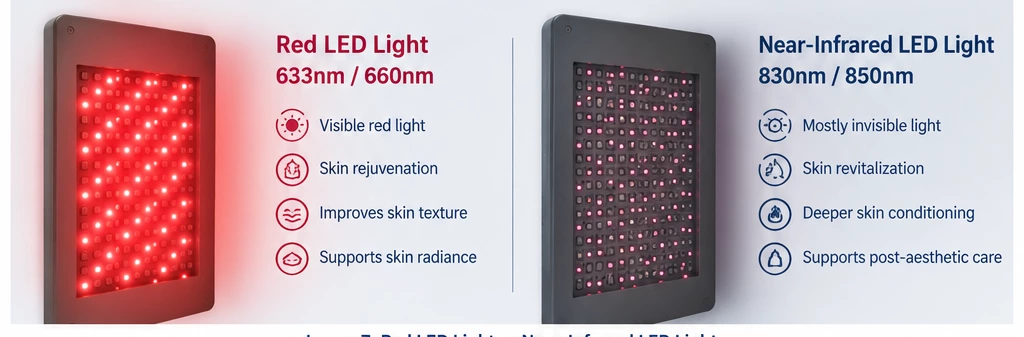
Red LED light and near-infrared LED light are related, but they should not be treated as identical technologies.
Red LED Light
Common wavelengths:
633nm
660nm
Typical aesthetic positioning:
- skin rejuvenation
- visible skin texture
- skin radiance
- mature-looking skin
- facial skin conditioning
Red LED is visible to the human eye and produces the familiar red illumination associated with professional LED therapy.
Near-Infrared LED Light
Common wavelengths:
830nm
850nm
Typical aesthetic positioning:
- skin revitalization
- longer-wavelength skin-conditioning programs
- mature-looking skin
- post-aesthetic care
- multi-wavelength rejuvenation
Near-infrared light is largely invisible or only faintly visible to the human eye.
Why Use Both?
The two wavelength ranges can complement each other.
Red light provides a visible red-light component commonly used in facial rejuvenation, while near-infrared extends the wavelength range of the treatment program.
This makes the combination particularly attractive for professional multi-wavelength LED systems.
[Image 7: Red LED Light vs Near-Infrared LED Light]
Why Combine Red and Near-Infrared LED Light?
Red and near-infrared LED is one of the most important combinations in professional light-based skin rejuvenation.
Common examples include:
633nm + 830nm
and:
660nm + 850nm
These wavelength combinations can be incorporated into professional programs focused on:
- advanced skin rejuvenation
- mature-looking skin
- skin vitality
- overall skin conditioning
- post-aesthetic care
- multi-wavelength facial rejuvenation
The advantage of a combination program is not simply that “more wavelengths are better.”
A professional system should instead use each wavelength for a clearly defined purpose within the overall protocol.
For example:
Red LED
→ visible skin rejuvenation and facial conditioning
Near-Infrared LED
→ complementary longer-wavelength skin revitalization
Together, they can form a more comprehensive light-based aesthetic program.
Internal Link:
Learn More About Red + Near-Infrared LED Therapy for Skin Rejuvenation →
Near-Infrared LED for Post-Aesthetic Skin Care
Post-aesthetic care is an important part of modern professional skin management.
After selected aesthetic procedures, clients may experience temporary changes in skin appearance, such as:
- redness
- dryness
- sensitivity
- stressed-looking skin
Professional clinics may therefore include LED therapy within a broader post-aesthetic care protocol.
Near-infrared LED therapy can be positioned as a gentle complementary treatment designed to support overall skin conditioning after selected aesthetic procedures.
The Omni Laser website should avoid statements such as:
heals wounds
treats inflammation
repairs injured tissue
accelerates surgical recovery
Instead, use professional aesthetic language such as:
supports post-aesthetic skin conditioning
complements professional post-treatment skin care
helps maintain a comfortable, non-invasive facial care program
This keeps the content clear and appropriate for aesthetic equipment buyers.
830nm, 850nm and Treatment Depth
A common question from professional buyers is whether longer wavelengths automatically penetrate deeper.
In general, wavelength influences how light is absorbed and scattered within biological tissue.
Near-infrared wavelengths such as 830nm and 850nm typically behave differently from visible blue, green, yellow and red light.
However, actual treatment depth and biological interaction depend on more than wavelength alone.
Other important factors include:
- optical power
- irradiance
- skin characteristics
- treatment distance
- LED angle
- treatment time
- device geometry
Therefore, professional LED equipment should not be marketed using overly simple claims such as:
“850nm always penetrates twice as deep as red light.”
A more accurate explanation is:
Near-infrared wavelengths provide different optical behavior and can complement visible red light in professional aesthetic treatment programs.
What Determines the Performance of a Professional Near-Infrared LED System?
Wavelength Accuracy
The actual LED wavelength should be clearly defined.
Professional systems may use:
830nm
850nm
or other selected near-infrared configurations.
Simply stating “infrared” is not enough for professional equipment evaluation.
Irradiance
Irradiance indicates the optical power delivered over a given area.
It is usually expressed in:
mW/cm²
Two LED systems using the same wavelength can deliver very different optical output.
Energy Density
Energy density represents the total optical energy delivered over the treatment period.
It is commonly expressed in:
J/cm²
Wavelength and energy density should therefore always be evaluated together.
Treatment Distance
The distance between the LED panel and the skin can significantly influence actual irradiance at the treatment area.
A professional system should therefore have:
- stable positioning
- appropriate treatment geometry
- repeatable treatment distance
LED Distribution
LED quantity alone does not determine treatment quality.
For example, Omni Laser offers:
1,800 LEDs across a 3-panel treatment head
and:
2,400 LEDs across a 5-panel treatment head
These configurations provide different coverage geometries.
However, a higher LED count alone does not automatically mean better treatment performance.
Professional equipment should also provide:
- uniform optical distribution
- appropriate panel positioning
- stable treatment distance
- consistent output
Treatment Area
For professional facial applications, the system should provide sufficient coverage for:
- forehead
- cheeks
- chin
- jawline
without requiring excessive repositioning.
The 5-panel configuration is particularly useful where broader surrounding facial coverage is desired, while the 3-panel configuration offers a more compact treatment-head structure.
Treatment Protocol
Treatment time and frequency should be designed according to the actual output characteristics of the system.
Protocols from another brand or research device should not automatically be copied to a different LED platform.
Professional LED therapy should always be treated as a combination of:
wavelength + irradiance + energy + distance + time + treatment area
rather than wavelength alone.
Professional Near-Infrared LED Therapy Systems from Omni Laser
Omni Laser develops professional multi-wavelength LED phototherapy systems for:
- aesthetic clinics
- professional skin-care centers
- medical-aesthetic practices
- distributors
- beauty equipment brands
- OEM/ODM partners
Depending on the system configuration, Omni Laser LED platforms can incorporate:
Red Light
Blue Light
Yellow Light
Green Light
Near-Infrared Light
Near-infrared configurations can include wavelengths such as:
830nm
and:
850nm
according to product design and intended application.
Omni Laser currently provides different professional multi-panel treatment-head configurations, including:
3-Panel LED Therapy System
1,800 LEDs
Suitable for professional multi-wavelength aesthetic applications in a compact treatment-head configuration.
5-Panel LED Therapy System
2,400 LEDs
Designed to provide broader surrounding coverage for professional facial and aesthetic treatment areas.
For professional buyers, selecting an LED system should involve more than wavelength or LED quantity alone.
Important factors include:
- wavelength configuration
- LED quantity
- irradiance
- energy density
- treatment area
- optical uniformity
- treatment distance
- software protocols
- system stability
- OEM/ODM flexibility
- regulatory documentation
A professional LED system should therefore be evaluated as a complete treatment platform rather than as a collection of individual LED colors or simply by the number of LEDs installed.
Frequently Asked Questions About Near-Infrared LED Therapy
What is near-infrared LED therapy used for in aesthetic skin care?
Near-infrared LED therapy can be incorporated into professional programs for skin revitalization, mature-looking skin, post-aesthetic care and multi-wavelength skin rejuvenation.
What is the difference between 830nm and 850nm?
830nm and 850nm are both near-infrared wavelengths.
They are close in wavelength, but not identical.
Their practical performance depends on the overall device design, including irradiance, energy density, treatment distance and treatment protocol.
Is near-infrared light visible?
Near-infrared light is largely outside the visible spectrum.
For this reason, an 830nm or 850nm LED system may not appear as visually bright as a visible red or blue LED system.
Is near-infrared LED the same as red LED?
No.
Visible red LED commonly uses wavelengths such as 633nm or 660nm.
Near-infrared LED uses longer wavelengths such as 830nm or 850nm.
They can be used separately or together within a professional LED treatment program.
Can near-infrared LED be used for post-aesthetic skin care?
Yes.
Near-infrared LED can be incorporated into professional post-aesthetic skin-conditioning programs when appropriate for the procedure, client and device instructions.
Can red and near-infrared LED light be used together?
Yes.
Red and near-infrared wavelengths are frequently combined in professional LED systems.
Common combinations include:
633nm + 830nm
and:
660nm + 850nm
for multi-wavelength skin-rejuvenation programs.
What is the difference between 660nm and 850nm?
660nm is visible red light, while 850nm is near-infrared light.
In professional aesthetic skin care, 660nm is commonly associated with visible skin rejuvenation and skin conditioning, while 850nm can complement red light within longer-wavelength skin-revitalization programs.
Is 830nm better than 850nm for skin rejuvenation?
Neither wavelength should automatically be considered universally better.
The appropriate wavelength depends on the intended treatment program and the overall design of the LED system.
How many LEDs are used in Omni Laser professional LED systems?
Omni Laser offers multi-panel professional LED configurations including:
3 panels with 1,800 LEDs
and:
5 panels with 2,400 LEDs
The appropriate configuration depends on the intended treatment area, device design and professional application.
Does a higher LED count always mean better performance?
No.
LED quantity is only one factor.
A professional LED system should also be evaluated according to:
- wavelength accuracy
- irradiance
- energy density
- optical uniformity
- treatment distance
- treatment area
- stability
- protocol design
A well-designed 1,800-LED system can therefore serve a different professional requirement from a 2,400-LED system.
How should clinics choose a professional near-infrared LED therapy system?
Clinics and distributors should evaluate:
- wavelength
- irradiance
- energy density
- LED quantity
- panel design
- treatment area
- treatment distance
- LED distribution
- optical uniformity
- available treatment protocols
- system stability
- manufacturer support
rather than selecting a device based on wavelength or LED count alone.
Professional Near-Infrared LED Solutions for Skin Revitalization
Near-infrared LED therapy has become an important part of modern professional aesthetic skin care.
Wavelengths such as 830nm and 850nm can be incorporated into programs for:
skin revitalization
mature-looking skin
post-aesthetic care
multi-wavelength skin rejuvenation
For professional clinics and distributors, wavelength is only one part of LED system performance.
A well-designed professional LED platform should combine:
appropriate wavelengths
controlled optical output
uniform treatment coverage
stable positioning
professional treatment protocols
Omni Laser's professional LED platforms include both a 3-panel configuration with 1,800 LEDs and a 5-panel configuration with 2,400 LEDs, allowing different system designs to address different professional treatment-area and coverage requirements.
Near-infrared LED therapy can also complement visible red light, making Red + Near-Infrared LED one of the most important multi-wavelength combinations for advanced professional skin rejuvenation.
Explore Omni Laser Professional LED Therapy Systems →
Contact Omni Laser for Professional LED Therapy OEM/ODM Solutions →