Русский
 Türkçe
 中文
中文
Red + Yellow + Near-Infrared LED Therapy for Multi-Wavelength Skin Rejuvenation
Red + Yellow + Near-Infrared LED Therapy for Multi-Wavelength Skin Rejuvenation
Professional LED therapy does not need to rely on a single wavelength.
Different wavelengths can be selected according to different aesthetic objectives, allowing clinics to create broader skin-care programs without assuming that every wavelength performs the same function.
For Omni Laser, the logic of the red + yellow + near-infrared combination is clear:
Red LED
→ skin rejuvenation
→ texture
→ radiance
→ mature-looking skin
590nm Yellow LED
→ sensitive-looking skin
→ redness-prone skin
→ gentle skin conditioning
→ post-aesthetic care
Near-Infrared LED
→ skin revitalization
→ mature-looking skin
→ complementary longer-wavelength conditioning
→ post-aesthetic support
When these wavelength ranges are incorporated into one professional program, the goal is not simply to provide “more colors.”
The goal is to create a multi-wavelength aesthetic protocol in which each wavelength has a defined role.
A recent randomized controlled exploratory study directly evaluated yellow light combined with red and infrared LED for facial photoaging. The 590nm group used 590nm yellow + 620nm red + 850nm infrared LED, supporting the practical use of this type of multi-wavelength combination in aesthetic skin rejuvenation. PubMed
[Image 1: Red + Yellow + Near-Infrared LED Therapy for Multi-Wavelength Skin Rejuvenation]
Why Use Multi-Wavelength LED Therapy?
A professional LED system may include several wavelengths, but the value of a multi-wavelength program does not come from the number of colors alone.
Each wavelength should address a different aesthetic objective.
A multi-wavelength treatment can therefore be useful when a client presents with more than one concern, such as:
- mature-looking skin
- reduced radiance
- visible sensitivity
- redness-prone complexion
- dull-looking skin
- uneven-looking texture
- post-aesthetic skin stress
Rather than treating all of these concerns with one wavelength, a professional clinic can select complementary wavelengths within one broader skin-care protocol.
The key principle is:
Complementary wavelengths should be selected according to skin-care goals, not simply added together for marketing.
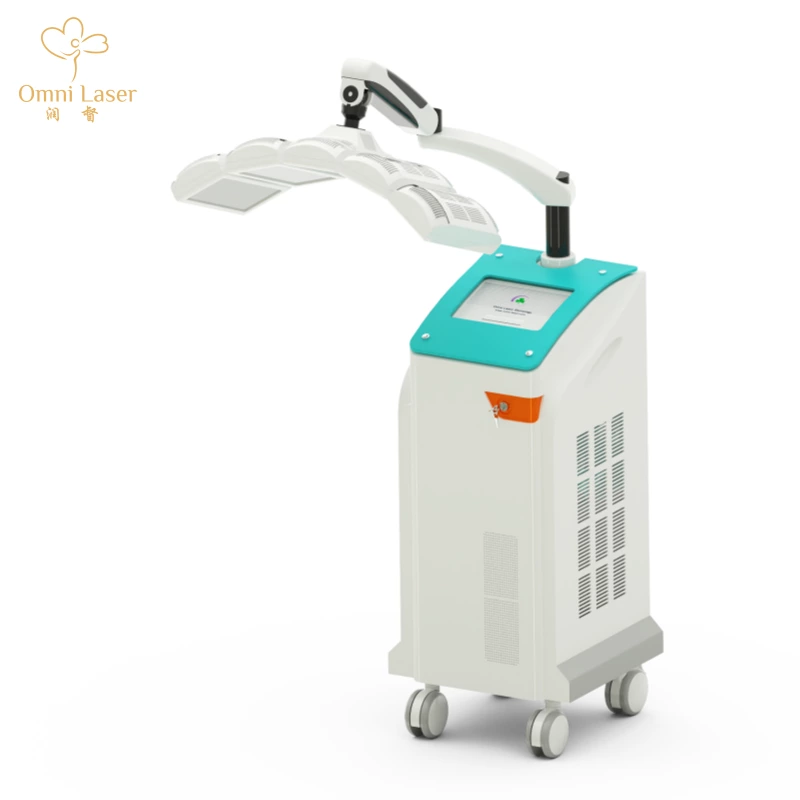
[Image 2: Professional Multi-Wavelength LED Therapy Device]
The Role of Red LED Light
Red LED forms the primary rejuvenation component of this combination.
Common professional red wavelengths include:
630–633nm
and:
660nm
Red LED is widely used in aesthetic programs focused on:
- skin rejuvenation
- visible fine-line care
- skin texture
- radiance
- mature-looking skin
- overall skin conditioning
Clinical studies have evaluated red wavelengths both alone and together with near-infrared light for facial rejuvenation.
A randomized split-face clinical study using 633nm red LED and 830nm near-infrared LED reported improvements in wrinkle measurements and skin elasticity in active treatment groups. PubMed
Another clinical study using 633nm + 830nm combination LED therapy reported improvements in photoaging-related skin measurements after repeated treatment. PubMed
Within the three-wavelength program, red LED should therefore remain the core rejuvenation wavelength.
The Role of 590nm Yellow LED Light
590nm yellow LED adds a different aesthetic function.
For Omni Laser, yellow LED is primarily positioned around:
- sensitive-looking skin
- redness-prone complexion
- gentle skin conditioning
- skin comfort
- post-aesthetic care
A 2026 prospective randomized controlled trial compared 590nm yellow LED alone with 590nm + 630nm yellow-red LED therapy in participants with sensitive skin.
Both LED groups improved sensitive-skin scores compared with control, while the yellow-red dual-wavelength group showed complementary benefits. PubMed
This makes 590nm particularly useful when a rejuvenation client also has:
- sensitivity concerns
- visible redness
- stressed-looking skin
- reduced skin comfort
In the three-wavelength program, yellow LED therefore contributes the gentle conditioning and sensitive-skin component.
The Role of Near-Infrared LED Light
Near-infrared light extends the program beyond visible wavelengths.
Common professional NIR wavelengths include:
830nm
and:
850nm
Near-infrared light is largely invisible to the human eye and behaves differently within tissue compared with visible red or yellow light.
For professional aesthetic applications, NIR can be positioned around:
- skin revitalization
- mature-looking skin
- complementary deeper skin conditioning
- post-aesthetic care
- advanced rejuvenation programs
The role of near-infrared is not to replace red light.
Instead, it complements the visible red component within a broader multi-wavelength program.
[Image 3: Red, Yellow and Near-Infrared LED Light Interaction with the Skin]
Key Aesthetic Applications of Red + Yellow + Near-Infrared LED Therapy
Mature-Looking Skin
This is one of the most important applications.
Clients with mature-looking skin may be concerned with:
- visible fine lines
- reduced radiance
- tired-looking complexion
- uneven-looking texture
- reduced visible vitality
Red LED provides the primary rejuvenation component.
Near-infrared adds complementary longer-wavelength conditioning.
Yellow LED can be particularly valuable when the client also has sensitivity or redness concerns.
This makes the combination suitable for clients whose skin is both:
mature-looking
and:
sensitive-looking.
Sensitive and Mature-Looking Skin
Some anti-aging clients do not tolerate aggressive facial programs well.
Their skin may appear:
- thin-looking
- sensitive
- redness-prone
- easily stressed
For these clients, a multi-wavelength LED program can offer a gentler treatment concept.
The logic becomes:
590nm Yellow
→ gentle conditioning
Red
→ rejuvenation
Near-Infrared
→ broader revitalization support
This is one of the clearest commercial reasons for offering all three wavelength groups together.
Dull and Tired-Looking Skin
Clients may also seek treatment because their skin appears:
- dull
- tired
- less radiant
- less refreshed
Red and NIR can form the main revitalization component, while yellow light supports broader skin-conditioning needs.
Fine-Line and Texture Care
Red and near-infrared LED combinations have been clinically studied for facial photoaging and wrinkle-related outcomes. PubMed
Within the three-wavelength program, these two wavelength groups should carry the main fine-line and texture positioning.
Yellow should not be marketed as the primary wrinkle wavelength.
Redness-Prone Mature Skin
This is another useful niche.
Some mature-skin clients also show:
- visible redness
- temporary flushing
- sensitivity
- stressed-looking complexion
In these cases, yellow LED can complement the red + NIR rejuvenation program.
Post-Aesthetic Skin Conditioning
Multi-wavelength LED can also be incorporated into post-aesthetic skin-care programs when appropriate.
After selected procedures, skin may temporarily appear:
- red
- dry
- sensitive
- dull
- stressed-looking
The appropriate wording is:
post-aesthetic skin conditioning
rather than:
wound healing
tissue repair
or:
inflammation treatment.
[Image 4: Multi-Wavelength LED Facial Rejuvenation for Mature and Sensitive-Looking Skin]
What Does the Evidence Show for Yellow + Red + Infrared LED?
This is one of the most important sections of the article.
A 2025 randomized controlled exploratory study evaluated yellow LED combined with red and infrared light for facial photoaging.
One treatment group received:
590nm Yellow + 620nm Red + 850nm Infrared LED
while another used:
570nm Yellow + 620nm Red + 850nm Infrared LED.
Both groups were evaluated for facial photoaging outcomes. PubMed
For Omni Laser, the key point is not that 570nm and 590nm should both be offered.
We have already established a clearer product strategy around:
590nm Yellow LED
The important takeaway is that a combination of:
Yellow + Red + Near-Infrared
has direct clinical research support as a multi-wavelength facial photoaging approach. PubMed
That gives this final Treatment article a stronger evidence base than simply presenting it as a marketing combination.
[Image 5: 590nm Yellow + Red + 850nm Near-Infrared LED Combination]
Why Does Omni Laser Focus on 590nm Yellow in the Combination?
For an LED system, very small nominal wavelength differences should not automatically be treated as completely different treatment categories.
Real LED sources have a spectral bandwidth around their nominal wavelength.
For Omni Laser, keeping yellow light centered around:
590nm
provides several advantages:
- clearer product positioning
- easier clinic training
- easier distributor communication
- simpler protocol design
- less customer confusion
Therefore, in the multi-wavelength program, the yellow component remains:
590nm Yellow LED
rather than offering multiple nearby yellow wavelength choices.
Typical Multi-Wavelength Configurations
Professional systems may combine different red and near-infrared wavelengths.
Examples include:
590nm Yellow + 630–633nm Red + 830nm Near-Infrared
This configuration can be positioned around:
- sensitive-looking mature skin
- rejuvenation
- skin vitality
- gentle conditioning
590nm Yellow + 660nm Red + 850nm Near-Infrared
This configuration can also support:
- skin rejuvenation
- mature-looking skin
- skin conditioning
- multi-wavelength facial care
Neither combination should automatically be described as universally superior.
Overall performance depends on:
- irradiance
- energy density
- treatment time
- treatment distance
- optical uniformity
- panel geometry
- treatment protocol
Is Multi-Wavelength LED Better Than Single-Wavelength LED?
Not automatically.
This is an important professional point.
A controlled trial comparing red and near-infrared photobiomodulation found that a broader polychromatic light source did not necessarily outperform red light alone for all rejuvenation outcomes. PubMed
Therefore, Omni Laser should avoid claims such as:
more wavelengths always produce better results.
A more accurate message is:
Multi-wavelength LED provides greater protocol flexibility when a client presents with multiple aesthetic concerns.
Single-wavelength treatment may still be more appropriate when the treatment goal is very focused.
For example:
Blue LED
→ acne-prone skin care
590nm Yellow LED
→ sensitive-looking skin care
Red LED
→ focused rejuvenation
Multi-wavelength LED becomes useful when the clinic wants to combine several clearly defined objectives.
Who Is Red + Yellow + Near-Infrared LED Therapy Suitable For?
Within professional aesthetic skin care, this multi-wavelength program may be considered for clients concerned with:
- mature-looking skin
- visible fine lines
- dull complexion
- reduced radiance
- uneven-looking texture
- sensitive-looking skin
- redness-prone skin
- stressed-looking complexion
- post-aesthetic sensitivity
- maintenance-oriented rejuvenation
Treatment selection should always consider:
- individual skin condition
- professional assessment
- actual wavelength configuration
- treatment goals
- previous procedures
- device output
- treatment protocol
How Is Multi-Wavelength LED Therapy Used in Professional Aesthetic Clinics?
Advanced Rejuvenation Facial
A clinic may use red + yellow + NIR as part of a professional facial program for clients seeking broad rejuvenation with gentle skin conditioning.
Mature and Sensitive-Skin Program
This is one of the strongest positioning opportunities.
The program can combine:
590nm Yellow
→ sensitivity-oriented care
Red
→ rejuvenation
NIR
→ revitalization
Post-Aesthetic Care Program
After selected procedures, the clinic may incorporate a multi-wavelength LED protocol when appropriate for the client and procedure.
The treatment should remain positioned around:
skin conditioning
and:
appearance support.
Maintenance Program
Multi-wavelength LED can also be incorporated into repeat maintenance-oriented skin-care programs.
Customized Professional Protocol
The main advantage of a multi-wavelength platform is flexibility.
A clinic does not necessarily need to activate every wavelength during every session.
Protocols may be adapted according to:
- client concern
- skin appearance
- treatment objective
- previous procedures
- professional assessment
[Image 6: Professional Multi-Wavelength LED Treatment in an Aesthetic Clinic]
Red + Yellow + NIR vs Red + NIR
These programs overlap, but they should not be positioned identically.
Red + Near-Infrared
Primary focus:
- advanced rejuvenation
- mature-looking skin
- texture
- skin vitality
Red + Yellow + Near-Infrared
Broader focus:
- rejuvenation
- mature-looking skin
- sensitive-looking skin
- redness-prone care
- post-aesthetic conditioning
The yellow component adds an additional sensitive-skin dimension.
Red + Yellow + NIR vs Red + Yellow
Red + Yellow
Primary focus:
- sensitive-looking skin
- redness-prone skin
- gentle rejuvenation
Red + Yellow + NIR
Broader focus:
- sensitive-skin care
- rejuvenation
- mature-looking skin
- skin vitality
- post-aesthetic conditioning
Near-infrared expands the program toward broader revitalization.
Red + Yellow + NIR vs Red + Blue
These combinations have clearly different search intent.
Red + Yellow + NIR
Focus:
- rejuvenation
- mature-looking skin
- sensitive-looking skin
- post-aesthetic care
Red + Blue
Focus:
- acne-prone skin
- blemish-prone skin
- oily skin
- clearer-looking skin
This distinction is important for both client understanding and SEO structure.
[Image 7: Multi-Wavelength LED Program Comparison]
What Determines the Performance of a Professional Multi-Wavelength LED System?
Exact Wavelength Configuration
Professional buyers should know which wavelengths are actually installed.
Relevant examples include:
590nm Yellow
630–633nm / 660nm Red
830nm / 850nm Near-Infrared
The term “multi-color LED” alone is not technically sufficient.
Irradiance
Irradiance describes optical power delivered over the treatment area.
It is commonly expressed in:
mW/cm²
Energy Density
Energy density describes the total optical energy delivered during treatment.
It is commonly expressed in:
J/cm²
Spectral Distribution
When multiple wavelengths are used, the physical distribution of the LEDs matters.
Uniform wavelength distribution across the treatment area is preferable to creating unnecessary isolated color zones when the intended protocol is a combined treatment.
Optical Uniformity
The treatment area should receive relatively even illumination.
Treatment Distance
Distance affects actual optical power reaching the skin.
Panel Geometry
Omni Laser professional LED systems are available in:
3-Panel
and:
5-Panel
configurations.
These structures provide different coverage geometries for professional treatment environments.
Treatment Sequence
Depending on device design, wavelengths may be delivered:
- simultaneously
- sequentially
- according to preset protocols
Protocol Design
Professional multi-wavelength therapy should always be understood as:
wavelength + irradiance + energy density + distance + time + coverage + sequence
rather than simply:
three colors.
Professional Multi-Wavelength LED Therapy Systems from Omni Laser
Omni Laser develops professional LED phototherapy systems for:
- aesthetic clinics
- professional skin-care centers
- medical-aesthetic practices
- distributors
- beauty equipment brands
- OEM/ODM partners
Depending on system configuration, Omni Laser LED platforms can incorporate:
590nm Yellow Light
Red Light
such as 630–633nm / 660nm
and:
Near-Infrared Light
such as 830nm / 850nm
within professional multi-wavelength treatment programs.
Omni Laser professional systems are available in:
3-Panel
and:
5-Panel
configurations.
Professional buyers should evaluate:
- exact wavelength configuration
- irradiance
- energy density
- spectral distribution
- optical uniformity
- treatment distance
- panel geometry
- treatment coverage
- treatment sequence
- software protocols
- system stability
- OEM/ODM capability
- regulatory documentation
rather than selecting a system purely by the number of colors available.
Frequently Asked Questions About Multi-Wavelength LED Therapy
What is multi-wavelength LED therapy?
Multi-wavelength LED therapy combines selected LED wavelengths within one professional treatment platform to address different aesthetic skin-care objectives.
Why combine red, yellow and near-infrared LED?
The three wavelength groups have different aesthetic positioning:
Red
→ rejuvenation
590nm Yellow
→ sensitive-looking and redness-prone skin care
Near-Infrared
→ skin revitalization and complementary longer-wavelength conditioning
Does Omni Laser use 590nm yellow light?
Yes.
For yellow-light applications, Omni Laser focuses on 590nm as the nominal yellow wavelength.
What red wavelengths can be used?
Professional configurations may use:
630–633nm
or:
660nm
depending on product design.
What near-infrared wavelengths can be used?
Common professional NIR configurations include:
830nm
and:
850nm
Is yellow + red + NIR clinically studied?
Yes.
A randomized controlled exploratory study evaluated 590nm yellow + 620nm red + 850nm infrared LED for facial photoaging. PubMed
Is more wavelengths always better?
No.
The value of a multi-wavelength system is flexibility and complementary targeting of different aesthetic concerns.
More wavelengths do not automatically guarantee better results.
Can all wavelengths be used at the same time?
Depending on device design, wavelengths may be used simultaneously or according to preset treatment sequences.
The actual protocol should match the device configuration and professional treatment objective.
Is multi-wavelength LED suitable for sensitive-looking mature skin?
It can be a useful professional option because yellow light can provide sensitivity-oriented care while red and near-infrared wavelengths support broader rejuvenation and revitalization.
Can multi-wavelength LED be used after aesthetic procedures?
It may be incorporated into professional post-aesthetic skin-conditioning programs when appropriate for the procedure, client and device instructions.
What is the difference between a 3-panel and 5-panel system?
The main difference is treatment-head geometry and coverage design.
Both can be used in professional multi-wavelength LED programs.
Professional Multi-Wavelength LED Solutions from Omni Laser
Red + yellow + near-infrared LED therapy represents one of the most comprehensive combinations within professional aesthetic LED skin care.
The treatment logic is clear:
Red LED
→ rejuvenation
→ texture
→ radiance
590nm Yellow LED
→ sensitive-looking skin
→ redness-prone care
→ gentle conditioning
Near-Infrared LED
→ skin revitalization
→ mature-looking skin
→ complementary longer-wavelength conditioning
Together, these wavelengths can support a broader professional program for clients who present with multiple aesthetic concerns.
For Omni Laser, the purpose of multi-wavelength LED therapy is not to offer the largest possible number of colors.
It is to provide:
Clear Wavelength Roles + Flexible Professional Protocols + Multi-Concern Skin Care
Omni Laser professional LED systems are available in 3-panel and 5-panel configurations, allowing clinics, distributors and OEM/ODM customers to select different treatment-head structures according to their product and treatment requirements.
Explore Omni Laser Professional LED Therapy Systems →
Learn More About Red LED Therapy for Skin Rejuvenation →
Learn More About 590nm Yellow LED Therapy →
Learn More About Red + Near-Infrared LED Therapy →
Contact Omni Laser for Professional LED Therapy OEM/ODM Solutions →