Русский
 Türkçe
 中文
中文
Red + Yellow LED Therapy for Sensitive and Redness-Prone Skin Care
Red + Yellow LED Therapy for Sensitive and Redness-Prone Skin Care
Red + yellow LED therapy combines two visible-light wavelength ranges with different aesthetic roles.
For Omni Laser, the yellow-light component is positioned around:
590nm Yellow LED
while professional red-light configurations may include wavelengths around:
630–633nm
or:
660nm
The treatment logic is straightforward.
590nm Yellow LED is primarily positioned around:
- sensitive-looking skin
- redness-prone complexion
- gentle skin conditioning
- post-aesthetic care
while:
Red LED is more commonly associated with:
- skin rejuvenation
- visible skin texture
- radiance
- mature-looking skin
- overall skin conditioning
When used together, the combination can support a broader professional aesthetic program for clients concerned with both skin sensitivity and overall skin appearance.
A 2026 prospective randomized controlled trial specifically evaluated 590nm yellow LED alone versus 590nm + 630nm dual-wavelength LED therapy in people with sensitive skin. Both LED groups improved sensitive-skin scores compared with control, and the dual-wavelength group showed complementary benefits. PubMed
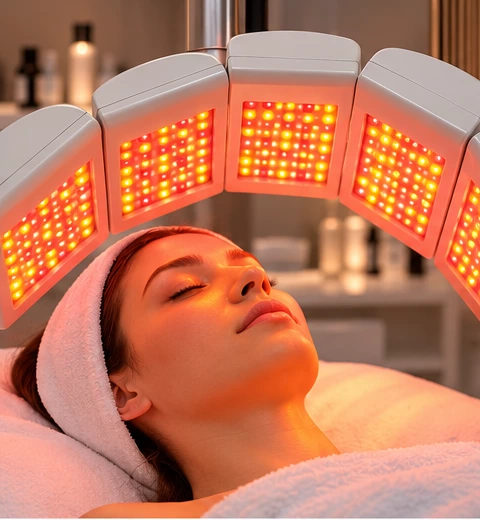
[Image 1: Red + Yellow LED Therapy for Sensitive and Redness-Prone Skin Care]
Why Combine 590nm Yellow and Red LED Light?
A multi-wavelength treatment should not be marketed simply as:
more colors = better.
Each wavelength needs a defined role.
590nm Yellow LED
Primary aesthetic positioning:
- sensitive-looking skin
- redness-prone skin
- gentle conditioning
- post-aesthetic skin care
- complexion comfort
Red LED
Typical professional wavelengths:
630–633nm / 660nm
Primary aesthetic positioning:
- skin rejuvenation
- skin texture
- radiance
- mature-looking skin
- broader facial conditioning
The combination therefore creates a program that can address:
sensitivity-oriented care
plus:
rejuvenation-oriented care
within one professional LED platform.
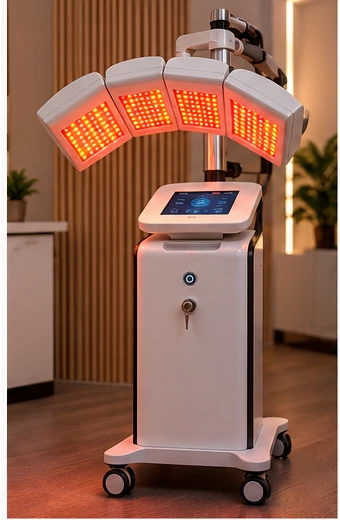
[Image 2: Professional Red + Yellow LED Therapy Device]
The Role of 590nm Yellow LED Light
590nm yellow LED is the core sensitive-skin wavelength in this treatment program.
For professional aesthetic positioning, 590nm can be used around:
- sensitive-looking skin
- temporary visible redness
- stressed-looking complexion
- gentle skin conditioning
- post-aesthetic care
Recent clinical evidence strengthens this positioning.
In the 2026 randomized controlled trial, the 590nm yellow-light group showed improvements in several measured skin parameters, including sensitive-skin scores, erythema index and transepidermal water loss compared with control. PubMed
For Omni Laser, this supports a professional message such as:
590nm Yellow LED supports gentle skin conditioning for sensitive-looking and redness-prone skin.
Avoid stronger claims such as:
treats rosacea
removes vascular lesions
cures sensitive skin
because those move beyond an appropriate aesthetic positioning.
The Role of Red LED Light
Red LED contributes a different function.
Professional red wavelengths commonly include:
630–633nm
and:
660nm
Red LED is more strongly associated with:
- skin rejuvenation
- skin texture
- radiance
- mature-looking skin
- overall facial conditioning
A 2023 clinical study using 630 ± 10nm red LED reported improvements in several visible skin-aging measures, including wrinkle-related outcomes and skin quality parameters. PubMed
Within the red + yellow combination, the role of red light is therefore:
to complement sensitive-skin care with broader rejuvenation and skin-conditioning support.
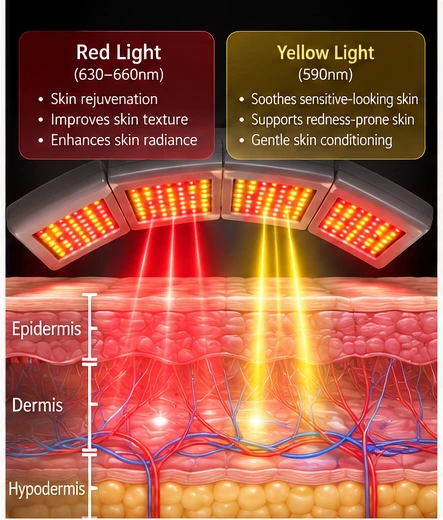
[Image 3: Red and 590nm Yellow LED Light Interaction with the Skin]
Key Aesthetic Applications of Red + Yellow LED Therapy
Sensitive-Looking Skin
This is the primary application.
Clients may be concerned with:
- visible sensitivity
- temporary redness
- dry-looking skin
- stressed-looking complexion
- reduced skin comfort
- sensitivity after professional facial procedures
590nm yellow LED forms the main sensitive-skin component, while red LED adds broader skin-conditioning support.
Redness-Prone Skin
Some clients experience:
- easily reddened skin
- temporary flushing
- uneven-looking facial color
- post-treatment redness
Red + yellow LED can be incorporated into professional aesthetic programs focused on a calmer and more balanced-looking complexion.
Appropriate wording includes:
supports redness-prone skin care
supports a calmer-looking complexion
complements gentle facial conditioning
rather than:
treats vascular disease
or:
eliminates redness permanently.
Stressed-Looking Skin
Skin may look stressed after:
- environmental exposure
- cleansing
- exfoliation
- intensive facial care
- selected aesthetic procedures
The yellow-light component can support gentle conditioning, while the red-light component supports broader skin appearance.
Mature and Sensitive-Looking Skin
Some clients have both:
mature-looking skin
and:
sensitivity concerns.
This is where red + yellow LED becomes particularly useful as a professional aesthetic combination.
Yellow light addresses the sensitivity-oriented part of the program.
Red light adds:
- texture support
- radiance
- rejuvenation-oriented conditioning
This gives clinics a more balanced treatment option than using either wavelength alone.
Post-Aesthetic Skin Conditioning
After selected aesthetic procedures, the skin may temporarily appear:
- red
- dry
- stressed
- sensitive
Yellow + red LED may be incorporated into a broader post-aesthetic protocol when appropriate for:
- the procedure
- client condition
- device instructions
- professional assessment
The preferred wording remains:
post-aesthetic skin conditioning
rather than:
wound healing
or:
tissue repair treatment.
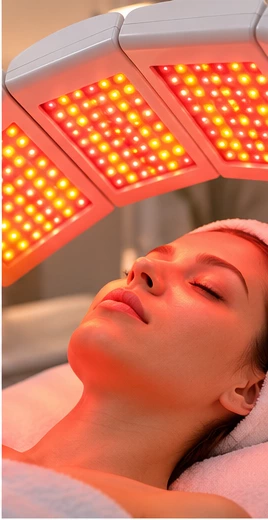
[Image 4: Red + Yellow LED Facial Care for Sensitive-Looking Skin]
590nm Yellow + 630nm Red LED: What Does the Evidence Show?
This is the most important evidence-based section of the article.
A 2026 randomized controlled trial compared three groups:
- control skin care
- 590nm yellow LED
- 590nm + 630nm dual-wavelength LED
in participants with sensitive skin.
Both LED groups showed improvements in sensitive-skin symptom scores compared with control.
The dual-wavelength 590/630nm group also showed complementary benefits, supporting the idea that yellow and red wavelengths can be combined within a sensitive-skin care program. PubMed
For Omni Laser, this provides a strong and clear positioning:
590nm Yellow
→ sensitive-looking / redness-prone skin care
630–633nm Red
→ complementary skin conditioning and rejuvenation
This is much more defensible than simply claiming:
“yellow + red is better because two colors work better than one.”
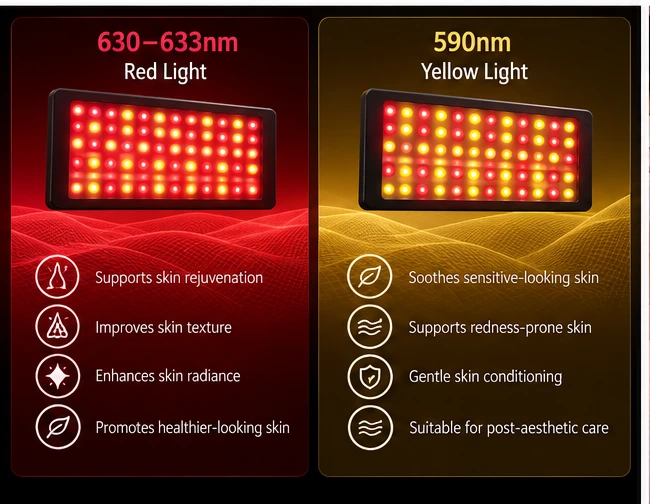
[Image 5: 590nm Yellow + 630–633nm Red LED Combination]
Can 590nm Yellow Be Combined with 660nm Red?
Yes.
660nm is another common professional red-light wavelength.
While the strongest recent sensitive-skin combination evidence specifically uses 590nm + 630nm, professional LED systems may also combine 590nm yellow with 660nm red depending on system design.
For aesthetic positioning:
590nm Yellow
→ sensitive-looking skin / redness-prone care
660nm Red
→ rejuvenation / texture / radiance
However, the website should avoid implying that a 590nm + 660nm configuration has exactly the same clinical evidence as the 590nm + 630nm study.
The principle should be:
actual claims should match the exact wavelength configuration and available evidence.
Red + Yellow LED vs Yellow LED Alone
Yellow LED alone can be appropriate when the main objective is:
- sensitive-looking skin
- redness-prone skin
- gentle conditioning
- post-aesthetic care
Red + yellow LED becomes more relevant when the clinic also wants to include:
- skin rejuvenation
- texture support
- radiance
- mature-looking skin care
The distinction is therefore:
Yellow Only
More focused on:
sensitivity + redness-prone care
Red + Yellow
Broader focus on:
sensitivity + skin conditioning + rejuvenation support
Neither approach should automatically be described as universally better.
Who Is Red + Yellow LED Therapy Suitable For?
Within professional aesthetic skin care, red + yellow LED programs may be considered for clients concerned with:
- sensitive-looking skin
- redness-prone complexion
- dry or stressed-looking skin
- mature-looking sensitive skin
- reduced radiance
- post-aesthetic sensitivity
- gentle rejuvenation
- maintenance-oriented skin care
Treatment selection should always take into account:
- individual skin condition
- professional assessment
- treatment history
- actual wavelength configuration
- device output
- treatment protocol
How Is Red + Yellow LED Therapy Used in Professional Aesthetic Clinics?
Sensitive-Skin Facial Program
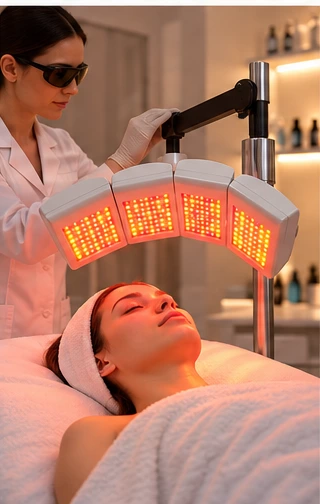
590nm yellow + red LED can be incorporated into a gentle facial protocol for clients whose skin appears sensitive or redness-prone.
Rejuvenation for Sensitive-Looking Skin
For clients seeking rejuvenation but who also have sensitivity concerns, the combination can provide:
yellow-light conditioning
plus:
red-light rejuvenation support.
Post-Aesthetic Care Program
Red + yellow LED may be used following selected aesthetic procedures when appropriate.
The treatment objective should remain:
supportive skin conditioning
rather than treatment of complications.
Maintenance Program
The combination can also be incorporated into repeat professional facial programs where gentle, non-invasive treatment is preferred.
Multi-Wavelength Program
Red + yellow LED can serve as part of a broader multi-wavelength program.
For example:
590nm Yellow + Red + Near-Infrared
can be used where the objective extends to:
- sensitive-looking skin
- rejuvenation
- skin vitality
- post-aesthetic care
[Image 6: Professional Red + Yellow LED Treatment in Aesthetic Clinics]
Red + Yellow LED vs Red + Blue LED
These combinations should have clearly different positioning.
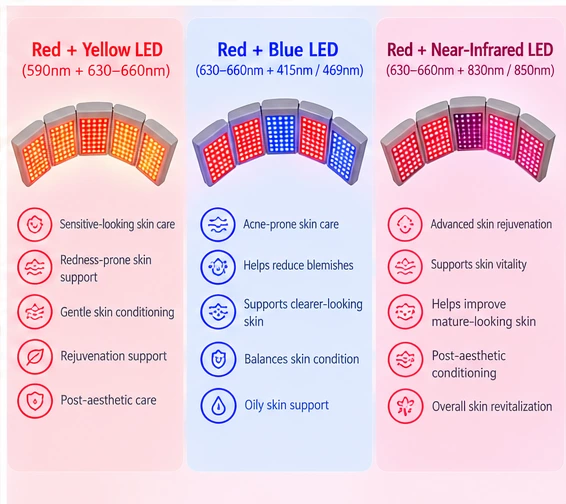
Red + Yellow LED
Primary focus:
- sensitive-looking skin
- redness-prone skin
- gentle conditioning
- rejuvenation support
- post-aesthetic care
Red + Blue LED
Primary focus:
- acne-prone skin
- blemish-prone skin
- oily skin
- clearer-looking skin
- skin conditioning
This distinction helps both clients and search engines understand the treatment structure.
Red + Yellow LED vs Red + Near-Infrared LED
These programs should also remain distinct.
Red + Yellow LED
Focus:
sensitive-looking skin + gentle rejuvenation
Red + Near-Infrared LED
Focus:
advanced rejuvenation + mature-looking skin + skin vitality
This keeps each combination page from competing for the same search intent.
[Image 7: Red + Yellow LED vs Red + Blue vs Red + Near-Infrared LED Programs]
What Determines the Performance of a Professional Red + Yellow LED System?
Wavelength Configuration
Professional buyers should know the actual wavelengths used.
For Omni Laser, the yellow-light configuration is centered around:
590nm Yellow
with red wavelengths such as:
630–633nm
or:
660nm
depending on product configuration.
Irradiance
Irradiance represents the optical power delivered over the treatment area.
It is commonly expressed in:
mW/cm²
Energy Density
Energy density represents the total optical energy delivered during treatment.
It is commonly expressed in:
J/cm²
Treatment Distance
The distance between the LED panels and the skin affects actual delivered irradiance.
Optical Uniformity
Professional full-face care requires relatively even illumination across the intended treatment area.
Panel Geometry
Omni Laser professional LED systems are available in:
3-Panel
and:
5-Panel
configurations.
These structures provide different treatment-head geometries and coverage options for professional environments.
Treatment Sequence
Depending on system design, yellow and red wavelengths may be delivered:
- simultaneously
- sequentially
- according to preset protocols
Treatment Protocol
Professional performance depends on:
wavelength + irradiance + energy density + distance + time + coverage + protocol
rather than color selection alone.
Professional Red + Yellow LED Therapy Systems from Omni Laser
Omni Laser develops professional multi-wavelength LED phototherapy systems for:
- aesthetic clinics
- professional skin-care centers
- medical-aesthetic practices
- distributors
- beauty equipment brands
- OEM/ODM partners
Depending on system configuration, Omni Laser LED platforms can incorporate:
590nm Yellow Light
together with:
Red Light
such as:
630–633nm / 660nm
for professional aesthetic programs focused on:
- sensitive-looking skin
- redness-prone skin
- skin conditioning
- gentle rejuvenation
- post-aesthetic care
Omni Laser professional LED systems are available in:
3-Panel
and:
5-Panel
treatment-head configurations.
Professional buyers should evaluate:
- exact wavelength configuration
- irradiance
- energy density
- optical uniformity
- treatment distance
- panel geometry
- treatment-area coverage
- software protocols
- system stability
- OEM/ODM requirements
- regulatory documentation
rather than simply counting the number of LED colors.
Frequently Asked Questions About Red + Yellow LED Therapy
What is red and yellow LED therapy used for?
In professional aesthetic skin care, red + yellow LED can be incorporated into programs for:
- sensitive-looking skin
- redness-prone skin
- gentle skin conditioning
- skin rejuvenation
- post-aesthetic care
What yellow wavelength does Omni Laser use?
For this treatment concept, Omni Laser focuses on:
590nm Yellow LED
as the nominal yellow-light wavelength.
What red wavelengths can be combined with 590nm yellow?
Professional configurations may include red wavelengths around:
630–633nm
or:
660nm
depending on system design.
Is 590nm + 630nm clinically studied?
Yes.
A 2026 randomized controlled trial evaluated 590nm yellow LED and 590nm + 630nm dual-wavelength LED therapy in sensitive skin. PubMed
Is red + yellow LED suitable for sensitive-looking skin?
Yes.
It can be incorporated into professional aesthetic programs where the objective is gentle conditioning together with broader skin-care support.
Is red + yellow LED suitable for redness-prone skin?
It can be positioned within professional redness-prone skin-care programs, using language such as:
supports a calmer-looking complexion
rather than medical vascular claims.
Can red + yellow LED be used after aesthetic procedures?
Yes, when appropriate for the procedure, client and device instructions.
It should be positioned as:
post-aesthetic skin conditioning.
Is red + yellow better than yellow alone?
Not necessarily.
Yellow alone may be suitable for focused sensitive-skin care.
Red + yellow provides broader rejuvenation and conditioning support.
Is red + yellow better than red + near-infrared?
They have different roles.
Red + Yellow
→ sensitive / redness-prone / gentle care
Red + NIR
→ advanced rejuvenation / mature-looking skin
What is the difference between 3-panel and 5-panel systems?
The difference is primarily treatment-head geometry and coverage design.
Both can be used for professional multi-wavelength aesthetic programs.
Professional Red + Yellow LED Solutions for Sensitive and Redness-Prone Skin
Red + yellow LED therapy provides a clear professional multi-wavelength option for clinics serving clients with sensitive-looking or redness-prone skin who also want broader skin-conditioning support.
The treatment logic is simple:
590nm Yellow LED
→ sensitive-looking skin
→ redness-prone skin
→ gentle conditioning
→ post-aesthetic care
Red LED
→ skin rejuvenation
→ texture
→ radiance
→ overall conditioning
Together, they can form a professional program positioned around:
Sensitive Skin Care + Gentle Rejuvenation
Omni Laser professional LED systems are available in 3-panel and 5-panel configurations, allowing clinics, distributors and OEM/ODM customers to select different treatment-head structures according to their product requirements.
Explore Omni Laser Professional LED Therapy Systems →
Learn More About 590nm Yellow LED Therapy →
Learn More About Red LED Light Therapy for Skin Rejuvenation →
Contact Omni Laser for Professional LED Therapy OEM/ODM Solutions →