Русский
 Türkçe
 中文
中文
Diode Laser Hair Removal Treatment: How Professional Laser Hair Reduction Works
Diode Laser Hair Removal Treatment: How Professional Laser Hair Reduction Works
Unwanted facial and body hair is one of the most common concerns treated in aesthetic clinics and medical spas.
Traditional hair removal methods such as shaving, waxing and depilatory creams remove hair temporarily but do not provide long-term reduction in hair growth.
Diode laser hair removal uses controlled laser energy to target pigmented hair structures within the skin. By converting absorbed light energy into heat, the treatment can thermally affect structures involved in hair growth and progressively reduce hair regrowth over a course of treatments.
For professional aesthetic practices, diode laser technology provides a dedicated solution for long-term hair reduction across multiple facial and body areas.
A. How Does Hair Grow?
Understanding the hair growth cycle is important because laser hair removal does not affect every hair equally at the same time.
Each hair follicle progresses independently through different stages of growth.
Anagen — Active Growth Phase
During the anagen phase, the hair is actively growing and contains substantial pigment within the hair structure.
This is generally the most responsive stage for laser hair removal because sufficient melanin is available to absorb laser energy and the growing hair is closely associated with the follicular structures involved in hair production.
Catagen — Transition Phase
During catagen, active hair growth stops and the follicle begins transitioning toward a resting state.
Hair in this stage is generally less responsive to laser treatment than actively growing anagen hair.
Telogen — Resting Phase
During telogen, the hair follicle is resting and the existing hair eventually sheds.
Because follicles within the same treatment area are not synchronized, only a proportion of hairs are in the most treatment-responsive growth phase at any one time.
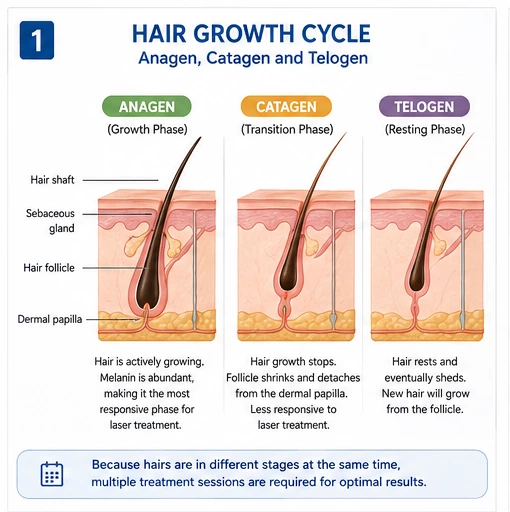
[Figure 1: Hair Growth Cycle – Anagen, Catagen and Telogen]
This is why professional laser hair removal normally requires a series of treatments rather than a single session.
B. How Does Diode Laser Hair Removal Work?
Diode laser hair removal is based on the principle of selective photothermolysis.
The objective is to deliver controlled optical energy to pigmented hair structures while minimizing unnecessary thermal exposure to surrounding skin.
The treatment process can be understood in five steps.
1. Laser Energy Is Delivered Into the Skin
The diode laser handpiece delivers controlled laser energy into the treatment area.
↓
2. Melanin in the Hair Absorbs the Laser Energy
Melanin is an important chromophore responsible for absorbing the delivered light energy.
Darker, more highly pigmented hair generally provides a stronger optical target than hair containing very little pigment.
↓
3. Light Energy Is Converted Into Heat
The absorbed optical energy is converted into thermal energy within and around the pigmented hair structure.
↓
4. Controlled Thermal Effects Reach the Hair Follicle
Heat is transferred to follicular structures involved in hair production.
When sufficient controlled thermal energy is delivered, the follicle's ability to produce new hair can be impaired.
↓
5. Hair Growth Is Progressively Reduced
Following repeated appropriately timed treatments, hair regrowth may become reduced, and remaining hairs may become finer or less noticeable.
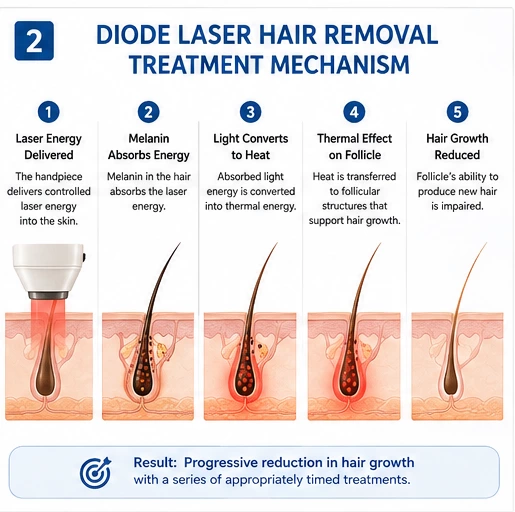
[Figure 2: Diode Laser Hair Removal Mechanism – Melanin Absorption and Follicular Heating]
C. Why Are Multiple Diode Laser Hair Removal Sessions Needed?
A common question from patients and clinic operators is:
Why can't all unwanted hair be removed in one treatment?
The primary reason is the hair growth cycle.
At any given time, hairs within the same body area may be in different stages of growth. Laser treatment is generally most effective when sufficient pigmented hair is present during active growth.
Hair follicles that are resting or transitioning during one session may become more responsive during later sessions.
For this reason, diode laser hair removal is normally performed as a treatment course with intervals between sessions.
The appropriate number of sessions and treatment interval depend on factors such as:
- Treatment area
- Hair density
- Hair thickness
- Hair color and pigment
- Skin type
- Individual hair growth cycle
- Hormonal influences
- Treatment parameters
- Individual response
Clinics should therefore avoid presenting a fixed number of sessions as a guaranteed result for every patient.
D. Which Areas Can Be Treated With Diode Laser Hair Removal?
Professional diode laser systems can be used for unwanted hair across multiple facial and body areas when the device configuration and treatment parameters are appropriate.
Facial Hair Removal
Common areas include:
- Upper lip
- Chin
- Jawline
- Sideburn area
- Selected facial areas
Smaller treatment areas may benefit from precision spot sizes or specialized treatment tips.
Underarm Hair Removal
The underarm is one of the most common professional laser hair removal areas because the hair is often relatively coarse and pigmented.
Bikini Hair Removal
Professional diode laser systems can be used for external bikini-line hair reduction with appropriate treatment parameters and professional protocols.
Leg Hair Removal
Large treatment areas such as the legs benefit from larger spot sizes and efficient treatment coverage.
Back and Chest Hair Removal
High-power systems and larger treatment areas can be particularly relevant for clinics treating male back, chest and abdominal hair.
Arm Hair Removal
Forearms and upper arms can also be treated according to hair characteristics and skin type.
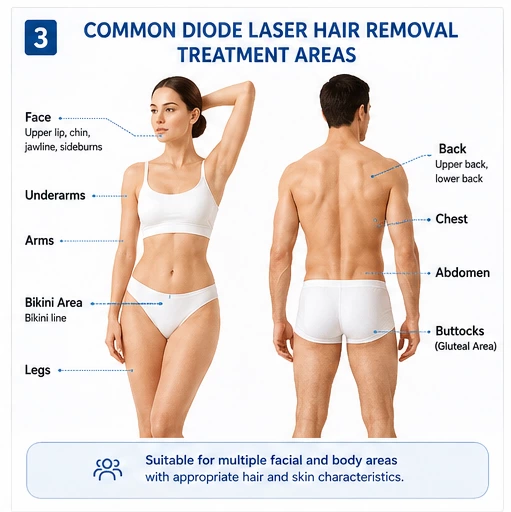
[Figure 3: Common Diode Laser Hair Removal Treatment Areas]
E. What Factors Affect Diode Laser Hair Removal Results?
Laser hair removal results vary between individuals.
Several factors influence how effectively the hair responds to treatment.
Hair Color
Melanin provides an important optical target for diode laser hair removal.
Highly pigmented hair generally absorbs laser energy more effectively than hair with very little pigment.
Therefore, white, grey and some very light hairs may respond poorly to conventional melanin-targeting laser hair removal.
Hair Thickness
Coarse, pigmented terminal hair generally provides a stronger optical target than very fine, lightly pigmented hair.
Skin Type
Epidermal melanin also absorbs optical energy.
For this reason, treatment parameters need to be adjusted according to skin type to balance effective follicular heating with epidermal protection.
Treatment Area
Hair characteristics and growth cycles vary across different areas of the body.
Facial hair, underarm hair and leg hair may therefore require different treatment strategies.
Hair Growth Stage
Actively growing hair is generally more responsive than hair in resting or transitional stages.
Treatment Parameters
Wavelength, fluence, pulse duration, frequency, spot size and cooling all influence the delivery of laser energy.
For a deeper explanation of these parameters:
Learn More About Diode Laser Hair Removal Technology →
F. Why Is Skin Type Important in Professional Laser Hair Removal?
Skin and hair both contain melanin.
The objective of professional laser hair removal is therefore not simply to use the highest possible energy.
Instead, the operator needs to select treatment parameters that provide sufficient energy to the target hair while managing thermal exposure to the surrounding epidermis.
This becomes particularly important as skin pigmentation increases.
Professional treatment planning may consider:
- Skin type
- Recent sun exposure
- Hair color
- Hair thickness
- Treatment area
- Previous laser response
- Cooling performance
- Appropriate wavelength and pulse parameters
Modern multi-wavelength diode laser platforms provide professionals with additional flexibility when treating different combinations of skin and hair characteristics.
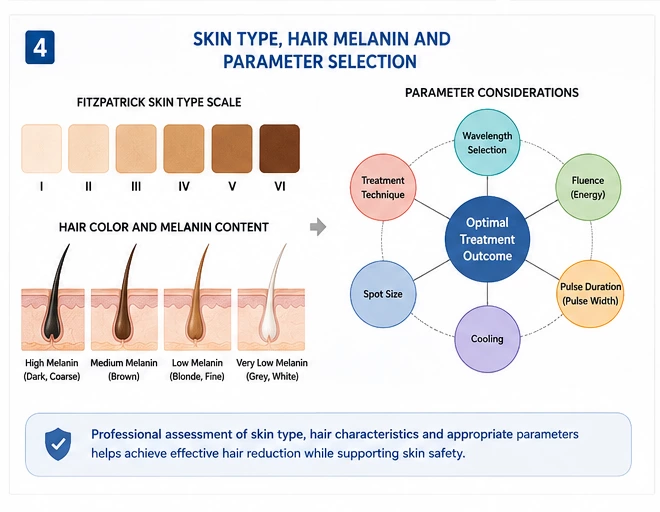
[Figure 4: Skin Type, Hair Melanin and Professional Diode Laser Parameter Selection]
G. Why Is Cooling Important During Diode Laser Hair Removal?
Laser hair removal intentionally generates thermal energy around the targeted hair structure.
Cooling is therefore an important part of professional treatment.
An effective cooling system can help:
- Manage epidermal temperature
- Improve treatment comfort
- Support controlled energy delivery
- Protect the skin surface during repeated laser pulses
Professional diode laser platforms may combine technologies such as sapphire contact cooling, semiconductor cooling and internal water circulation.
The detailed engineering principles of these cooling systems belong to the technology layer rather than the treatment layer.
Explore Diode Laser Cooling Technology →
H. What Happens During a Professional Diode Laser Hair Removal Treatment?
Although treatment protocols vary by device and patient, a professional treatment generally follows several basic steps.
Step 1 — Consultation and Assessment
The operator evaluates the treatment area, skin type, hair characteristics, relevant history and treatment expectations.
Step 2 — Treatment Area Preparation
Hair above the skin surface is typically shortened according to the treatment protocol, and the treatment area is prepared.
Step 3 — Parameter Selection
Appropriate settings are selected according to the patient's skin type, hair characteristics, treatment area and device instructions.
Step 4 — Laser Treatment
The handpiece delivers controlled laser energy across the selected treatment area while the cooling system helps manage epidermal temperature.
Step 5 — Post-Treatment Assessment
The treated skin is evaluated and appropriate post-treatment instructions are provided.
Step 6 — Follow-Up Treatment
Subsequent sessions are scheduled according to hair regrowth, treatment area and professional assessment.
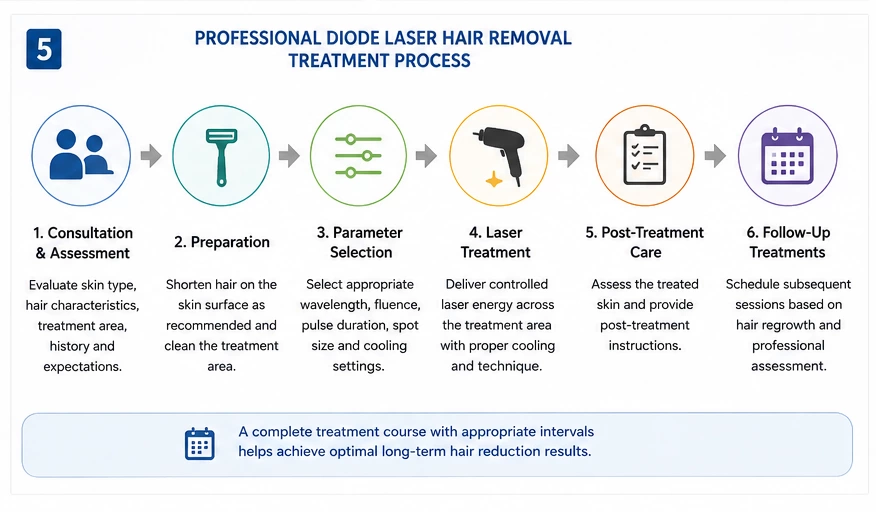
[Figure 5: Professional Diode Laser Hair Removal Treatment Workflow]
I. Diode Laser Hair Removal for Clinics and Medical Spas
For professional aesthetic practices, choosing a hair removal technology involves more than treatment efficacy alone.
Clinics should also consider:
- Treatment speed
- Treatment comfort
- Spot size options
- Cooling performance
- Wavelength configuration
- Handpiece ergonomics
- Daily treatment volume
- System reliability
- Operator training
- Technical support
A dedicated diode laser platform can be particularly suitable for businesses where professional hair removal is a core treatment service.
J. Diode Laser vs. IPL Hair Removal
Both diode laser and IPL can be used for professional light-based hair reduction, but they are different technologies.
| Feature | Diode Laser | IPL |
|---|---|---|
| Light Source | Semiconductor laser | Broad-spectrum pulsed light |
| Wavelength | Selected laser wavelength or wavelength combination | Broad spectrum controlled by filters |
| Main Positioning | Dedicated hair reduction | Multi-application aesthetic treatment |
| Hair Removal | Core application | One of several applications |
| Skin Treatments | Limited and system-dependent | Can include rejuvenation, pigmentation, acne and vascular applications |
| Clinic Advantage | Hair-removal specialization | Multi-treatment versatility |
For clinics focused primarily on high-volume hair removal, a professional diode laser system may provide a dedicated solution.
For clinics requiring hair removal together with multiple skin-treatment applications, IPL may offer greater application versatility.
Compare Professional IPL Hair Removal Systems →
K. Who Is a Good Candidate for Diode Laser Hair Removal?
Suitability should be assessed individually by a trained professional.
Factors to consider include:
- Skin type
- Hair color
- Hair thickness
- Treatment area
- Sun exposure
- Previous hair-removal treatments
- Relevant medications or skin conditions
- Individual treatment expectations
Because diode laser hair removal relies heavily on pigment within the hair as an optical target, not every hair color responds equally.
A professional consultation is therefore important before starting treatment.
Frequently Asked Questions About Diode Laser Hair Removal
Is diode laser hair removal permanent?
Professional diode laser treatment is more appropriately described as providing long-term or permanent hair reduction rather than guaranteeing complete permanent removal of every hair. Individual results vary according to hair characteristics, skin type, treatment area and treatment course.
How many diode laser hair removal sessions are needed?
Multiple sessions are normally required because hairs within the same treatment area are in different stages of the growth cycle. The appropriate number and interval of treatments vary between individuals and treatment areas.
Does diode laser hair removal work on all hair colors?
No. Diode laser hair removal relies primarily on melanin within the hair as an optical target. Dark, pigmented hair generally responds better than white, grey or very lightly pigmented hair.
Can diode laser hair removal be used on darker skin types?
Modern diode laser systems can support treatment across a broad range of skin types when suitable wavelengths, pulse parameters and cooling are selected. Professional assessment and appropriate parameter selection are particularly important for more highly pigmented skin.
What body areas can be treated?
Common treatment areas include the face, underarms, arms, bikini area, legs, back, chest and other areas with suitable unwanted pigmented hair.
Why is cooling important during treatment?
Cooling helps manage epidermal temperature and treatment comfort while controlled laser energy is delivered to the target hair structures.
What is the difference between diode laser and IPL hair removal?
Diode laser uses selected laser wavelengths and is primarily positioned as a dedicated hair-reduction technology. IPL uses filtered broad-spectrum light and can support hair removal together with multiple skin-treatment applications.
What determines the effectiveness of diode laser hair removal?
Important factors include hair pigmentation, hair thickness, skin type, hair growth stage, treatment area, wavelength, fluence, pulse duration, spot size, cooling and treatment protocol.
Professional Diode Laser Hair Removal Solutions
Omni Laser provides professional diode laser hair removal systems for aesthetic clinics, medical spas and international distributors.
Our diode laser platforms are available with multiple wavelength configurations, handpiece options, cooling technologies and system designs to meet different treatment volumes and professional requirements.