Русский
 Türkçe
 中文
中文
What Is 448kHz CET Technology and Why Is It Becoming a Trend in the Aesthetic Industry?
The Rise of 448kHz CET Technology: Market Trends and Core Principles Explained
Introduction
In recent years, the global aesthetic and wellness industry has been undergoing a major transformation. Clients are no longer satisfied with single-function beauty treatments—they are increasingly seeking solutions that combine skin rejuvenation, body care, and overall wellness.
Among emerging technologies, 448kHz CET (Capacitive Energy Transfer) radiofrequency has quickly gained attention as a powerful, non-invasive solution that bridges the gap between aesthetic treatments and health-oriented therapy.
This article explores both the current market trends and the core technology behind 448kHz CET systems, helping professionals better understand why this technology is becoming a new industry standard.
Chapter 1: Market Status and Development Trends of CET Radiofrequency
1.1 Growing Demand for Non-Invasive Aesthetic Technologies
The global aesthetic market is shifting rapidly toward non-invasive and pain-free treatments. Clients today prioritize:
-
Safety and minimal downtime
-
Comfortable treatment experiences
-
Visible, long-lasting results
This shift has accelerated the adoption of radiofrequency-based technologies, especially those capable of delivering both cosmetic and therapeutic benefits.
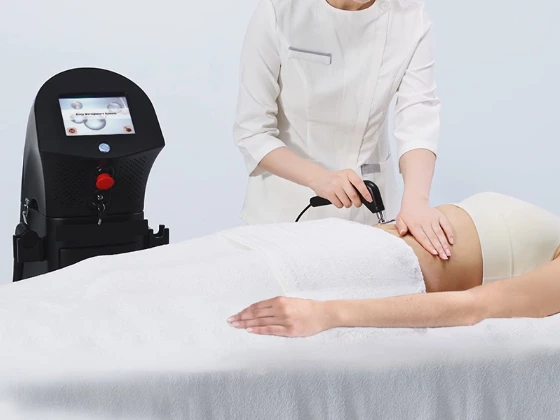
1.2 448kHz Devices: A Benchmark in Professional Institutions
Currently, 448kHz CET radiofrequency devices are widely used in:
-
Medical aesthetic clinics
-
Rehabilitation centers
-
Wellness and physiotherapy institutions
Professional-grade systems remain the gold standard due to their:
-
Stable energy output
-
Deeper tissue penetration
-
Clinically proven effectiveness
These features make them highly suitable for commercial use, where treatment consistency and results are critical.
1.3 The Rise of Multi-Functional RF Systems
Another major trend is the rapid growth of multi-functional aesthetic devices.
Instead of investing in multiple single-purpose machines, clinics are now looking for integrated platforms that can provide:
-
Skin tightening and anti-aging
-
Body contouring and fat reduction
-
Pain relief and rehabilitation support
This shift reflects a broader industry evolution from “single beauty treatments” to “comprehensive beauty + wellness solutions.”
1.4 Consumer Behavior Is Changing
Modern consumers are more informed and demanding than ever. They are not only focused on appearance but also on:
-
Long-term skin health
-
Body balance and detoxification
-
Preventive care and wellness
As a result, technologies like 448kHz CET are gaining popularity because they align perfectly with the concept of:
👉 “Beauty as self-care and health management.”
Chapter 2: What Is 448kHz CET Radiofrequency Technology?
2.1 Definition of CET (Capacitive Energy Transfer)
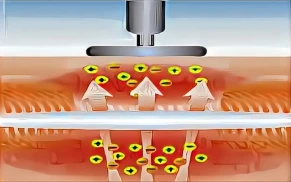
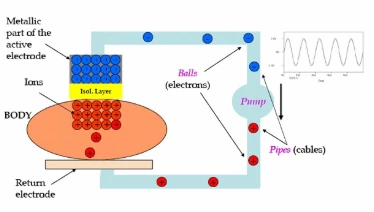
CET stands for Capacitive Energy Transfer, a technology that delivers radiofrequency energy into the body through a capacitive electrode.
Unlike traditional RF systems, CET focuses on controlled energy transmission through soft tissues, enabling:
-
Uniform heating
-
Deep tissue activation
-
Enhanced cellular response
The frequency 448kHz is particularly important, as it is widely recognized for its optimal interaction with biological tissues.
2.2 What Makes 448kHz Frequency Unique?
The 448kHz frequency is not arbitrary—it has been widely adopted due to its ability to:
-
Stimulate cellular metabolism
-
Improve microcirculation
-
Support tissue regeneration
Compared to higher-frequency RF systems, 448kHz offers a balanced combination of penetration depth and safety, making it ideal for both aesthetic and therapeutic applications.
2.3 CET vs Traditional RF Technologies
Traditional radiofrequency technologies are typically categorized as:
-
Monopolar RF
-
Bipolar RF
While effective, these systems often focus primarily on surface-level heating or limited penetration.
In contrast, CET technology provides:
-
More stable and uniform energy delivery
-
Better comfort during treatment
-
Enhanced biological activation at the cellular level
This makes CET especially suitable for multi-layer treatment, addressing both superficial and deeper tissues.
2.4 The Role of the Proionic System
A key innovation in advanced CET devices is the Proionic System, which focuses on maintaining ionic balance within tissues.
By regulating ion exchange, this system helps:
-
Optimize energy absorption
-
Reduce discomfort
-
Improve treatment efficiency
This mechanism enhances both safety and performance, making treatments more predictable and effective.
2.5 Why CET Fits Both Aesthetic and Wellness Applications
One of the biggest advantages of 448kHz CET technology is its versatility.
It is uniquely positioned to support:
-
Beauty treatments (skin tightening, anti-aging)
-
Body care (contouring, cellulite reduction)
-
Health applications (rehabilitation, pain relief)
This dual capability is the reason why CET is increasingly seen as a core technology for next-generation aesthetic and wellness devices.

Conclusion
The rise of 448kHz CET radiofrequency technology reflects a broader transformation in the industry—from isolated treatments to integrated beauty and wellness solutions.
With strong clinical foundations and expanding application scenarios, CET technology is not just a trend—it is becoming a new standard for professional aesthetic equipment worldwide.
In the next article, we will explore how 448kHz CET systems are applied across different treatment scenarios and why they can deliver multi-functional results.