Русский
 Türkçe
 中文
中文
Cold Plasma(Part 4)|How Plasma Works: The Complete Chain from Physics to Biology
Chapter 8|How Plasma Works: The Complete Chain from Physics to Biology
1. Plasma: The “Fourth State” of Matter
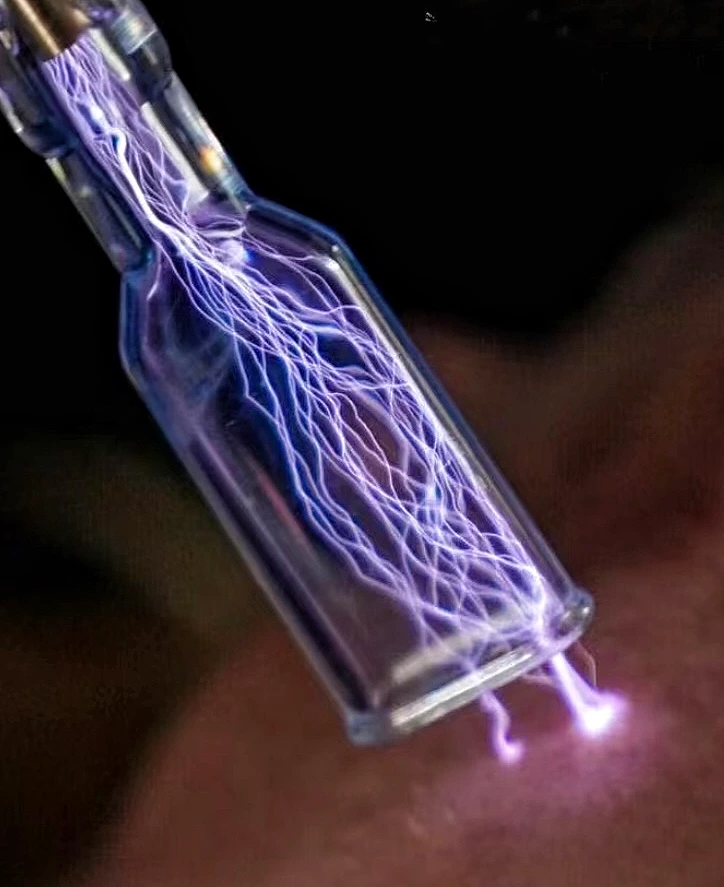
The three common states of matter—solid, liquid, and gas—undergo transitions when energy is continuously supplied. When gas molecules gain sufficient energy, electrons break free from atomic nuclei, forming an ionized state composed of free electrons, ions, and neutral particles—this is Plasma.
It constitutes about 99% of the visible matter in the universe, from stars to lightning. In medical aesthetics, cold plasma generated by artificially exciting inert gases (e.g., helium, argon) with an electric field has become a controllable and safe technology for biological applications.
2. From Ionization to Biological Response: The Chain of Plasma Action
(1) Physical Ionization Process
Gas ionizes under a high-voltage electric field, producing:
-
High-energy electrons and ions
-
Ultraviolet photons
-
Excited-state molecules
(2) Generation of Reactive Species
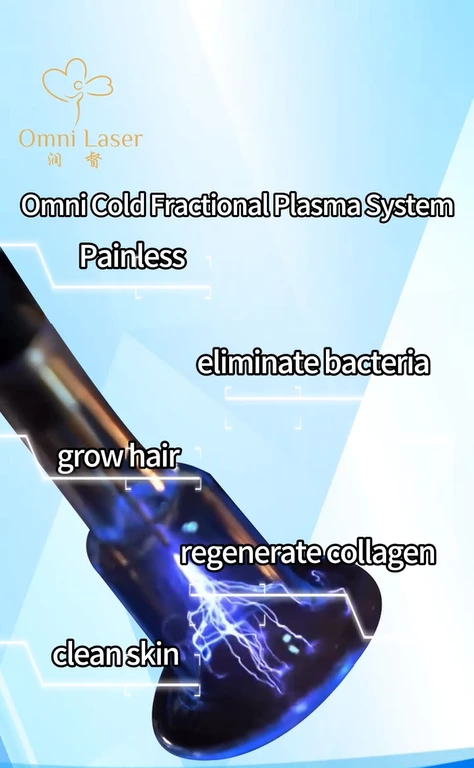
Plasma interacts with the surrounding environment (e.g., air, liquid), generating reactive oxygen and nitrogen species (ROS/RNS):
-
ROS: Ozone (O₃), singlet oxygen (¹O₂), hydrogen peroxide (H₂O₂), hydroxyl radicals (·OH)
-
RNS: Nitric oxide (NO), nitrogen dioxide (NO₂), etc.
(3) Biological Effects
ROS/RNS act as signaling molecules, activating cellular pathways at controlled concentrations:
-
Antibacterial Action: Oxidative disruption of microbial membrane structures and DNA
-
Promotion of Repair: Activation of fibroblasts, stimulation of collagen regeneration
-
Immune Modulation: Mild oxidative stress induces cellular antioxidant mechanisms
3. Cold Plasma vs. Thermal Plasma
| Feature | Cold Plasma | Thermal Plasma |
|---|---|---|
| Temperature | Near room temperature (30–60°C) | Thousands to millions of °C |
| Energy Distribution | Electron temperature ≫ ion temperature (non-thermal equilibrium) | Electrons and ions both at high temperatures (thermal equilibrium) |
| Applications | Medical aesthetics, material modification, sterilization | Nuclear fusion, industrial cutting, welding |
| Safety | Can directly contact biological tissues | Only for industrial or space physics |
Core Advantage of Cold Plasma:
High-energy electrons drive chemical reactions while gas temperature remains low, achieving "energy input without thermal damage"—making it suitable for biological tissue applications.
4. Safety Mechanisms: Why Cold Plasma is Safe for Skin
(1) Dose Control
By adjusting voltage, gas flow, and exposure time, ROS/RNS concentrations are precisely controlled, ensuring oxidative stress remains within the hormesis (beneficial stimulation) range and avoiding cytotoxicity.
(2) Limited Penetration Depth
Active plasma components penetrate tissues only at micrometer scales (typically <100 μm), primarily affecting the epidermis and superficial dermis without damaging deeper tissues.
(3) Adaptive Antioxidant Response
Under mild oxidative stress, skin cells upregulate antioxidant enzymes (e.g., superoxide dismutase, catalase), enhancing resilience and forming a positive feedback loop.
(4) Clinical Validation
Multiple studies (e.g., Plasma Processes and Polymers, 2017) confirm that cold plasma with appropriate parameters does not compromise skin barrier function and can even accelerate repair.

References
-
Physical Mechanisms:
-
Fridman, G., et al. (2008). Plasma Chemistry: Principles of plasma generation and reactive species production.
-
-
Biological Effects:
-
Laroussi, M. (2020). Cold Plasma in Medicine and Healthcare: ROS/RNS-mediated cellular signaling and regulation.
-
-
Safety:
-
Heinlin, J., et al. (2011). Journal of Investigative Dermatology: Effects of cold plasma on skin microbiota and barrier function.
-